Help Your 6 Year Old Sleep Better: Top Tips

What if the key to a calmer home and a happier, healthier youngster wasn’t a strict rule, but a series of simple, science-backed adjustments?
If your little one struggles to settle down at night, you’re not alone. Research from the Sleep Foundation shows that 15-25% of children and teens have trouble drifting off or staying asleep. Parents often seek effective sleep tips for 6 year old children to help improve their sleep schedule.
This guide is your roadmap to natural solutions. Medications are risky for young ones and are strongly discouraged. Instead, we focus on safe, effective behavioral strategies and environment tweaks that work for most kids.
Remember, every youngster is unique. Genetics, age, and even cultural habits play a role. What works for one family might need tuning for another. This article draws on expert advice from groups like the American Academy of Pediatrics to give you a trustworthy, comprehensive plan for your child’s sleep needs.
We’ll explore the “why” behind rest needs and deliver practical steps you can try. Better rest isn’t an overnight miracle, but a worthwhile investment. It leads to improved days for your child and more peaceful evenings for your entire household, ensuring that they get the necessary hours of sleep before bedtime.
Key Takeaways
- A significant number of children experience nighttime difficulties, making this a common challenge for families.
- Natural behavioral and environmental changes are the recommended, safest path forward, not medication.
- Your child’s needs are personal, so be prepared to gently experiment with different techniques.
- This guide provides a full plan, from understanding the science to applying real-world bedtime strategies.
- Improving your child’s rest patterns benefits their daily mood, learning, and long-term well-being.
- The entire family dynamic often improves when bedtime becomes a smoother, more positive experience.
Why Quality Sleep is Crucial for Your 6-Year-Old
Quality nighttime rest isn’t a luxury for young ones; it’s a biological necessity that powers their growth, learning, and emotional well-being. During these critical hours, your youngster’s body and brain undergo essential maintenance and development processes that simply cannot happen during waking time. To help your child establish a healthy sleep schedule, the American Academy of Pediatrics recommends ensuring that kids get enough hours of sleep before bedtime.
Think of proper slumber as the invisible architect of your child‘s day. It builds the foundation for everything from classroom concentration to playground interactions. When this foundation is solid, everything else functions better. To help your child establish healthy sleep habits, it’s essential to make sure they get enough hours of sleep before bedtime, as recommended by the American Academy of Pediatrics for kids of all ages.
Impact on Mood, Learning, and Behavior
Your youngster’s emotional state is deeply tied to their rest. A well-rested child has a larger capacity for managing frustration and disappointment. They can navigate school challenges with more resilience. According to the American Academy of Pediatrics, establishing a healthy sleep routine is crucial for kids, including teens and even babies.
Their brain uses the nighttime to sort and store information. This memory consolidation is vital for learning new skills and retaining lessons. Without it, focus and attention suffer noticeably during the day. Ensuring your child gets enough hours of sleep before bedtime is essential for optimal development.
Behavioral changes are often the first red flag. Insufficient rest can manifest as increased irritability, hyperactivity, or defiance. Following multi-step instructions becomes much harder.
The immediate consequences are clear in academic and social settings. A tired youngster struggles with peer relationships and classroom participation. Their ability to process information slows down.
| Area of Development | With Quality Rest | With Poor Rest |
|---|---|---|
| Emotional Regulation | Better mood stability, handles frustration well | Easily upset, frequent emotional outbursts |
| Learning & Memory | Strong information retention, good focus | Forgetfulness, difficulty concentrating |
| Social Interactions | Positive peer engagement, shares willingly | Withdrawn or conflict-prone with friends |
| Physical Coordination | Good balance and motor skills for activities | Clumsiness, slower reaction times |
| Daytime Energy | Sustained vitality throughout the day | Fatigue, lethargy, frequent complaints of tiredness |
Long-Term Health Benefits
During deep rest cycles, the body releases growth hormone. This supports healthy physical development at this age. The systems that regulate metabolism and appetite also reset overnight, which is crucial for child sleep according to the American Academy of Pediatrics.
A strong immune system depends on consistent, quality slumber. Well-rested children are better equipped to fight off common illnesses. This means fewer missed school days and disruptions, allowing kids to thrive in their activities.
Establishing good patterns now sets a trajectory for future health. Research suggests it can reduce risks for certain metabolic and mental health concerns later in life, especially for teens. The habits formed today matter tomorrow, and ensuring adequate hours of sleep each night is vital.
Safety improves with proper rest. A youngster with adequate nighttime recovery has sharper judgment during physical activities. Their coordination is better, reducing accident risks, which is essential for their overall development.
When a child sleeps well, they’re more likely to make better food choices and better choices in how they engage with friends and family.
Social connections flourish. A rested kid approaches relationships with more patience and empathy. Family interactions become more positive and less strained.
Remember, this isn’t passive downtime. It’s an active, essential process for overall development. Investing in good rest patterns is one of the most valuable ways to support your youngster’s complete well-being.
How Much Sleep Does a 6-Year-Old Really Need?
The question of sufficient rest duration for a six-year-old has a range-based answer that accounts for natural variation among children. While guidelines from the American Academy of Pediatrics provide a target of recommended hours of sleep per night, your youngster’s individual needs are the final determinant.
Understanding both the official recommendations and your child’s personal signals creates a complete picture. This knowledge helps you establish healthy bedtime patterns that support their development and help your child thrive.
American Academy of Pediatrics Recommendations
The American Academy of Pediatrics offers clear guidance for school-aged youngsters. They recommend 9 to 12 hours of rest per 24-hour period for children ages 6 through 12, emphasizing the importance of a consistent bedtime to ensure quality sleep night after night.
This wide range exists for a good reason. Each youngster has unique biological requirements. Some thrive on 9 hours, while others need a full 12 to feel their best, helping your child achieve optimal health and development.
Genetics, activity levels, and overall health influence individual needs. The goal is to find your child’s sweet spot within this healthy spectrum, ensuring they get the right amount of sleep to support their growth.
To calculate current rest duration, track for a week. Note bedtime, wake-up time, and any remaining naps. Add the nightly and nap hours together for a daily total, which is crucial for understanding your child’s sleep patterns.
Compare this average to the AAP’s 9-12 hour recommendation. This simple audit reveals if adjustments are necessary, helping to ensure that your kids are getting the sleep they need for their well-being.
Signs Your Child is Getting Enough Sleep
Observable behaviors tell you more than any clock. A well-rested youngster displays consistent, positive signals throughout their day.
Morning awakening is a key indicator. Natural waking without an alarm or repeated prompting suggests sufficient duration of hours bedtime. They should appear refreshed, not groggy or resistant to rising.
Daytime alertness remains stable. Your child maintains good focus during activities and learning. They don’t experience dramatic energy crashes, especially after school. The American Academy of Pediatrics emphasizes the importance of adequate child sleep for overall well-being.
Emotional regulation is smoother. They handle minor frustrations without major meltdowns. Their general mood is positive and cooperative, which can help your kids thrive in social situations.
Contrast these with red flags of deprivation. Difficulty waking, daytime drowsiness, and after-school irritability are common warnings. If you must drag your youngster from bed, they likely need more rest, similar to what babies require for healthy development.
| Signs of Sufficient Rest | Signs of Insufficient Rest |
|---|---|
| Wakes up naturally, feeling refreshed | Requires multiple alarms or physical waking |
| Sustained energy and focus all day | Noticeable fatigue or spaciness by afternoon |
| Generally positive, stable mood | Increased irritability, hyperactivity, or tears |
| Functions well academically and socially | Struggles with concentration and peer interactions |
| No intense craving for weekend “catch-up” | Begs to sleep very late on weekends |
Differentiate normal tiredness from chronic shortage. Every youngster feels weary after an extra-active day. Consistent patterns of fatigue affecting daily function signal a problem.
The weekend “catch-up” myth deserves attention. Making up for lost rest on Saturday and Sunday disrupts the body’s natural rhythm. Consistent nightly duration beats a variable schedule.
Needs can temporarily increase. Growth spurts, illness, or periods of high mental exertion may require more rest. Be responsive to these temporary shifts.
Adjust schedules gradually when needed. Shift bedtime or wake-up time by 15 minutes every few days. Sudden changes confuse the internal clock.
Use this simple assessment across multiple dimensions:
- Mood: Is your youngster generally cheerful and resilient?
- Energy: Do they maintain vitality from morning until evening?
- Focus: Can they concentrate on tasks appropriate for their age?
- Behavior: Are their actions mostly cooperative and appropriate?
If most answers are “yes,” your child is likely getting what they need. Several “no” responses suggest it’s time to increase their nightly rest duration.
Essential Sleep Tips for Your 6 Year Old: Building a Rock-Solid Routine
A structured pre-bed sequence acts like a gentle signal, telling your youngster’s body and mind it’s time to unwind and prepare for the night ahead. This framework of habits, often called sleep hygiene, provides the predictability kids crave, as recommended by the American Academy of Pediatrics.
Good evening patterns don’t happen by accident. They require intentional design and consistent practice to help child development. The investment pays off with smoother transitions and more peaceful nights for everyone, including babies.
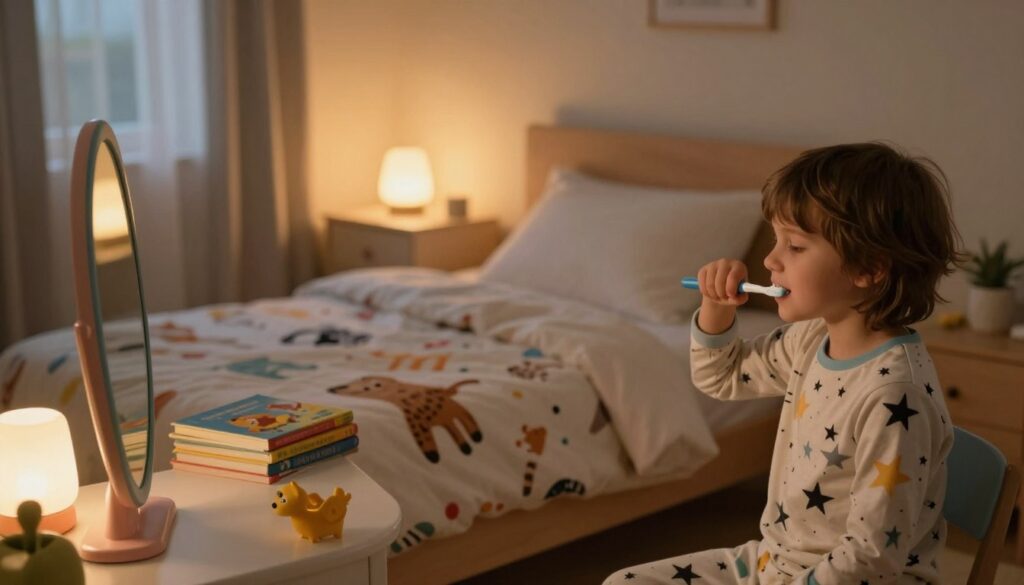
The Power of Consistency
Your youngster’s internal clock thrives on regularity. Going to bed and waking up at roughly the same time each day stabilizes their circadian rhythm. This biological timer regulates alertness and drowsiness, which is essential for all kids, including babies.
The specific hour matters less than the consistency. A 7:30 PM bedtime that shifts by an hour nightly confuses their system. A steady 8:00 PM schedule, even on weekends, works better, as emphasized by the American Academy of Pediatrics.
Research shows predictable patterns reduce anxiety. Knowing what comes next allows children to relax. Their brains begin releasing melatonin, the sleep-promoting hormone, in anticipation, helping child development.
Parental follow-through makes all the difference. Sticking to the plan, even when you’re tired, establishes trust in the process. Your commitment teaches your youngster that these patterns matter, as noted by the Academy Pediatrics.
Visual charts help concrete thinkers. Create a simple poster with pictures for each step: pajamas, toothbrush, story, lights out. Checking off tasks gives children a sense of accomplishment.
| Consistency Factor | Why It Matters | Practical Application |
|---|---|---|
| Fixed Bedtime | Signals the brain to start winding down, regulates melatonin release | Choose a time 9-12 hours before wake-up; maintain within 30 minutes daily |
| Fixed Wake Time | Anchors the circadian rhythm, makes falling asleep easier at night | Wake your child at the same time, even after a late night; avoid sleeping in |
| Routine Sequence | Creates muscle memory and mental associations with relaxation | Perform steps in the same order: hygiene, pajamas, story, cuddle, lights out |
| Weekend Schedule | Prevents “social jetlag” that disrupts Monday morning readiness | Keep bedtime and wake time within one hour of weekday schedule |
| Parental Modeling | Children learn habits by observation; consistency becomes a family value | Establish your own evening wind-down; talk about why rest matters |
Key Elements of a 20-Minute Wind-Down
The ideal preparation period lasts about twenty minutes. This gives enough time for transition without dragging on. Three to four calm activities work perfectly to help child sleep better.
Start with a clear beginning signal. This could be a special phrase, turning off the TV, or dimming lights. The cue tells your youngster that active play has ended.
Include necessary hygiene tasks. Brushing teeth and using the bathroom are non-negotiable. Frame them positively as part of “getting ready” rather than chores, as recommended by the American Academy of Pediatrics.
Incorporate connection and calm. Reading together, gentle talking, or soft music lowers heart rates and breathing. Physical touch like back rubs releases oxytocin, the bonding hormone, which is beneficial for babies and kids.
Avoid stimulating elements. Skip tickling, roughhousing, or exciting stories. The goal is decreasing arousal, not increasing it. Keep voices soft and lights low.
Handle common disruptors proactively. When homework runs late, shorten the routine but keep the sequence. For special occasions, return to the normal schedule the next night.
Establishing new patterns takes patience. Introduce one change per week if current habits aren’t working. Celebrate small successes to build momentum and help child adapt.
The routine itself is less important than its predictability. It’s the reliable sequence that tells a child’s nervous system, ‘You are safe, it’s time to rest.’
Morning routines create helpful bookends. A consistent wake-up ritual reinforces the sleep-wake cycle. Together, evening and morning patterns structure your youngster’s day.
Remember that every child responds differently. Some need more physical closeness, others prefer independence. Observe what truly calms your youngster and build from there.
The right way to approach this is with flexibility within structure. Maintain the core sequence while adjusting details as needed. Your consistency provides the safety net for natural rest to flourish.
Creating the Ideal Sleep Environment
The physical space where your kids rest plays a surprisingly powerful role in how easily they drift off and stay asleep through the night. Think of the bedroom not just as a place to lie down, but as a carefully designed habitat that supports your child’s natural biological rhythms, as emphasized by the American Academy of Pediatrics.
Environmental cues directly communicate with the nervous system. Temperature, illumination, and sound levels send constant signals about whether it’s time to be alert or to rest. Optimizing these elements creates conditions where quality slumber can occur naturally.
This isn’t about expensive renovations. Simple, science-backed adjustments to your youngster’s sleeping quarters can yield dramatic improvements. The goal is to remove obstacles and enhance signals that promote healthy rest patterns.
Consider how each sensory input affects your kids’ ability to unwind. A room that’s too warm, brightly lit, or noisy works against their body’s preparation for sleep, as highlighted by the American Academy of Pediatrics. Conversely, a cool, dark, and quiet space aligns perfectly with physiological needs.
These environmental factors work synergistically with the bedtime routine discussed earlier. While the routine prepares the mind, the bedroom setup supports the body. Together, they create a comprehensive approach to better nighttime rest.
The Magic of Cool, Dark, and Quiet
Temperature regulation is crucial for quality slumber. Your youngster’s body needs to drop its core temperature slightly to initiate and maintain sleep. A cooler bedroom facilitates this natural process.
The ideal range is around 68°F (20°C). This might feel chilly to adults during waking hours, but it’s optimal for nighttime rest. Thermoregulation during sleep affects sleep architecture and reduces awakenings.
Use a programmable thermostat if available. Set it to lower the temperature about an hour before bedtime. This gives the room time to cool down before your child enters.
Dress your youngster in appropriate pajamas for the season. Lightweight, breathable fabrics work best. Avoid heavy blankets that might cause overheating during the night.
Darkness triggers melatonin production. This hormone tells the brain it’s time to sleep. Even small amounts of light can suppress its release, delaying sleep onset.
Blackout curtains or shades are excellent investments. They block streetlights, early morning sun, and other external light sources. Install them properly to eliminate light gaps around the edges.
If your child needs a nightlight, choose carefully. Select one with a warm, dim glow rather than bright white or blue light. Position it low to the ground, pointing away from the bed.
Eliminate all electronic light sources in the bedroom. Cover LED indicators on devices with electrical tape. Charge phones and tablets outside the sleeping area entirely.
Consistent noise levels support uninterrupted rest. Sudden sounds can cause micro-arousals, fragmenting sleep even if your youngster doesn’t fully wake up.
White noise machines create a consistent auditory blanket. This masks disruptive noises like traffic, household sounds, or a snoring sibling. The steady sound becomes a cue for sleep.
Simple alternatives include a fan or air purifier. These provide both airflow and consistent background noise. Place them at a reasonable distance from the bed.
For shared rooms or apartments, consider soundproofing measures. Area rugs absorb sound, and bookshelves filled with books can act as noise buffers on shared walls.
| Environmental Factor | Optimal Condition | Practical Solution | Biological Reason |
|---|---|---|---|
| Temperature | Cool (68°F/20°C) | Programmable thermostat, breathable pajamas | Facilitates natural core temperature drop needed for sleep initiation |
| Light Level | Complete darkness | Blackout curtains, dim nightlight placed low | Triggers melatonin production; light suppresses sleep hormone |
| Noise Level | Consistent quiet | White noise machine, fan, sound-absorbing materials | Prevents micro-arousals that fragment sleep architecture |
| Electronic Presence | None in bedroom | Charge devices outside room, remove TVs | Eliminates blue light exposure and mental stimulation before bed |
| Air Quality | Fresh, circulating | Air purifier, open window when safe | Supports respiratory health and comfortable breathing during sleep |
Remember that these three elements—cool, dark, and quiet—work together. Improving just one helps, but optimizing all three creates the most supportive environment. Start with the element that seems most disruptive in your home.
Managing Light and Electronics Before Bed
Electronic devices present a dual challenge to healthy rest. They emit sleep-disrupting blue light while providing mentally stimulating content. Both factors interfere with your youngster’s natural wind-down process.
Blue light has a particularly strong effect on children’s sensitive systems. It suppresses melatonin production more dramatically than in adults. This makes evening screen exposure especially problematic for young ones.
The American Academy of Pediatrics recommends a family media plan. This creates clear guidelines about device use timing and locations. It helps establish healthy digital habits for everyone in the household.
Establish an electronic curfew one hour before bedtime. This means turning off all screens: televisions, tablets, computers, and phones. The pre-bed period should be completely screen-free.
Remove all electronic devices from the bedroom. Televisions don’t belong in any child’s sleeping quarters. Charge phones and tablets in a common family area overnight.
Dim household lighting during the wind-down hour. Turn off bright overhead lights and use lamps instead. This gradual reduction in illumination signals the body to prepare for rest.
Darkness is the cue that tells your brain to release melatonin. If you have all the lights on and the TV on, your body can’t do its job properly.
Offer appealing alternatives to screen time. Your youngster might resist giving up devices if they don’t have other engaging options. Prepare a basket of wind-down activities.
Consider these screen-free alternatives:
- Audiobooks or calming music: These engage the imagination without visual stimulation
- Quiet board games or puzzles: Choose simple games that don’t create excitement
- Physical books or magazines: Reading actual pages avoids blue light exposure
- Conversation or storytelling: Share family stories or discuss the day’s events
- Gentle stretching or yoga: Simple poses help release physical tension
Implement changes gradually if your child resists. Start by reducing screen time by 15 minutes each night. Use positive reinforcement when they cooperate with the new rules.
Involve your youngster in creating their sleep sanctuary. Let them choose a nightlight color or select blackout curtains. Ownership increases cooperation with environmental changes.
Address common environmental challenges creatively. For shared rooms, use room dividers or bunk beds with curtains. In small spaces, multi-functional furniture can hide sleep-disrupting items during nighttime hours.
Urban noise requires consistent masking sounds. White noise machines with volume control work well. Consider earplugs for older children who can use them safely.
Remember that environmental optimization enhances routine effectiveness. A cool, dark, quiet room makes your bedtime routine more successful. The routine, in turn, helps your child appreciate their improved sleeping space.
Make these adjustments part of your family’s daily rhythm. Consistency in environment, like consistency in routine, teaches your youngster’s body what to expect. This predictability supports healthier, more restorative rest patterns.
Daytime Habits That Promote Better Sleep
What happens during your youngster’s waking hours directly shapes their ability to unwind and rest when evening arrives. The choices made from morning until dusk create a biological blueprint for nighttime tranquility.
This isn’t about adding more tasks to your already busy schedule. It’s about aligning daily rhythms with your child’s natural needs, as highlighted by the american academy pediatrics. Simple adjustments to movement, nutrition, and stimulation yield significant improvements.
Think of daytime habits as the invisible scaffolding supporting nighttime rest. When these patterns work in harmony, settling down becomes easier. The evening routine then becomes the final piece, not the entire solution.
The Role of Physical Activity and Exercise
Regular movement during daylight hours is one of the most effective promoters of quality nighttime rest. Physical exertion helps regulate your youngster’s internal clock and reduces pent-up energy.
Active play supports the body’s natural need for movement. It also promotes healthier tiredness by evening. This isn’t about exhausting your child, but providing appropriate outlets for their vitality.
The connection between daytime exertion and evening calm is well-documented. Children who engage in regular activity tend to fall asleep faster. They also experience more consolidated, deeper rest cycles.

Age-appropriate movement matters for six-year-olds. Aim for at least sixty minutes of moderate to vigorous activity daily. This can be spread throughout the day in smaller bursts.
Consider these beneficial forms of movement:
- Outdoor play: Running, climbing, biking, or playground time
- Structured sports: Soccer, swimming, or gymnastics classes
- Family activities: Walking, hiking, or backyard games
- Creative movement: Dancing, obstacle courses, or active pretend play
Timing is crucial for maximizing benefits. Morning and afternoon activity aligns best with natural energy peaks. Late-day vigorous exertion can backfire by overstimulating the nervous system.
Avoid intense physical exertion within two hours of bedtime. The adrenaline and elevated body temperature from vigorous play need time to subside. This allows the natural cooling process that initiates slumber to occur.
Instead, offer calming alternatives as evening approaches. Gentle stretching, quiet walks, or yoga poses help transition the body. These activities release tension without creating stimulation.
| Activity Timing | Beneficial Effects on Rest | Potential Disruptions | Practical Recommendations |
|---|---|---|---|
| Morning (Before Noon) | Boosts daytime alertness, reinforces circadian rhythm | None when moderate; excessive fatigue if too intense | Encourage active play after breakfast; walk to school if possible |
| Afternoon (1-4 PM) | Natural energy outlet, promotes healthy tiredness by evening | Can interfere with homework focus if not balanced | Schedule outdoor time after school; combine with social play |
| Early Evening (4-6 PM) | Moderate activity helps transition from day to night | Vigorous exercise may delay sleep onset | Choose family walks, gentle bike rides, or calming play |
| Late Evening (Within 2 hours of bed) | Gentle movement only; helps release physical tension | Any vigorous activity disrupts wind-down process | Stretching, yoga, or quiet indoor movement only |
| Weekend Patterns | Consistent activity maintains rhythm | Complete inactivity creates restlessness | Plan one family active outing; maintain daily movement |
Why Caffeine is a No-Go for Kids
This stimulant has particularly potent effects on young, developing systems. Even small amounts can significantly disrupt natural rest patterns. The impact lasts much longer in children than adults.
Caffeine works by blocking adenosine receptors in the brain. This chemical naturally builds up throughout the day, signaling tiredness. When caffeine interferes, the body misses these crucial signals.
For youngsters, the consequences extend beyond difficulty falling asleep. Rest quality diminishes, with more frequent awakenings and less deep slumber. Morning refreshment suffers even if duration seems adequate.
Hidden sources in children’s diets often go unnoticed. Chocolate, certain sodas, teas, and even some medications contain this stimulant. What seems like a harmless treat can have lasting effects.
A child’s smaller body mass means caffeine concentrations are higher and effects last longer. What would be a mild pick-me-up for an adult can significantly disrupt a child’s nervous system.
Common culprits include:
- Dark colas: Most contain caffeine (root beer is usually an exception)
- Chocolate: Especially dark chocolate; cocoa naturally contains stimulants
- Tea: Both black and green varieties, including some herbal blends
- Energy drinks: Absolutely inappropriate for children of any age
- Some medications: Check labels of cold medicines and pain relievers
- Decaf coffee: Still contains trace amounts that can affect sensitive systems
Practical elimination strategies make this transition smoother. Begin by reading labels together with your youngster. Turn it into a detective game rather than a restriction.
Offer appealing alternatives that feel special. Sparkling water with fruit, herbal iced “tea,” or homemade fruit smoothies work well. Let your child help create new family favorites.
Establish a family-wide policy for consistency. When adults also limit their intake, children don’t feel singled out. This creates a healthier home environment for everyone.
If your youngster currently consumes caffeine, reduce gradually. Sudden elimination might cause resistance. Cut amounts by half each week until completely phased out.
Additional Daytime Considerations
Nutrition plays a supporting role in rest quality. Meal timing, food choices, and hydration patterns influence how easily your child settles at night.
Aim for consistent meal and snack times. This regulates blood sugar and prevents evening hunger. A light, balanced snack about an hour before bed can prevent midnight waking.
Include tryptophan-rich foods in evening meals. Turkey, chicken, eggs, nuts, and seeds contain this amino acid. It’s a building block for melatonin, the sleep-promoting hormone.
Limit sugary treats, especially in the late afternoon and evening. The energy spike and subsequent crash disrupt natural rhythms. Complex carbohydrates at dinner support steadier energy release.
Daylight exposure regulates circadian rhythms powerfully. Natural morning light signals the brain to be alert. It also helps set the internal clock for evening melatonin release.
Ensure your youngster gets at least thirty minutes of outdoor light daily. Morning exposure is most beneficial. Even cloudy days provide sufficient light intensity for this purpose.
Indoor lifestyles with artificial lighting confuse biological timing. Make outdoor time a non-negotiable part of each day. Walk together, play in the yard, or visit a park.
Stress management during waking hours affects evening calm. School anxieties, social worries, or family tensions can manifest as bedtime resistance.
Create daily decompression rituals. After-school chats, quiet drawing time, or worry journals help process emotions. Addressing concerns before evening prevents them from surfacing at bedtime.
| Daytime Habit Area | Optimal Practice | Common Pitfall | Simple Adjustment |
|---|---|---|---|
| Physical Activity | 60+ minutes daily, finished 2+ hours before bed | Late-night vigorous play or complete inactivity | Schedule active time after school; calm movement after dinner |
| Caffeine Consumption | Complete avoidance for children | Hidden sources in treats, sodas, or medications | Read all labels; create tasty caffeine-free alternatives |
| Nutrition Timing | Regular meals, light evening snack if needed | Large meals close to bedtime or sugary evening treats | Finish dinner 2-3 hours before bed; offer banana or crackers if hungry |
| Daylight Exposure | 30+ minutes of outdoor light, especially morning | Indoor-only days with artificial lighting | Walk to school or park; outdoor play after school |
| Stress Management | Daily decompression, worry processing before evening | Bottled-up anxieties surfacing at bedtime | After-school chat ritual; worry jar for concerns |
| Hydration Pattern | Consistent fluids throughout day, tapering before bed | Evening overhydration leading to nighttime bathroom trips | Offer water regularly; limit large drinks within hour of bedtime |
Implement these changes gradually rather than all at once. Start with one area where improvement seems most needed. Success in one domain often creates momentum for others.
Remember that consistency matters more than perfection. An active day followed by a calm evening creates positive patterns. Your attention to these daytime details makes nighttime smoother for everyone.
Solving Common Bedtime Battles and Sleep Disruptions
Navigating bedtime challenges requires understanding both your youngster’s developmental stage and practical problem-solving techniques. Even with the best routine, unexpected hurdles can arise.
This section addresses those inevitable moments. You’ll find specific strategies for common scenarios that disrupt evening peace.
Each approach balances empathy with consistency. Your response teaches valuable coping skills while maintaining necessary boundaries.
Handling Nightmares and Fears
Scary dreams are a normal part of development at this age. Your youngster’s growing imagination can sometimes create frightening scenarios during the night.
Prevention starts with daytime content choices. Avoid scary movies, stories, or video games before bed. These images often resurface during dream cycles.
Create a calming pre-bed environment. Gentle stories and positive conversations set a safer mental stage. This reduces the likelihood of distressing dreams.
When nightmares occur, your immediate response matters. Offer comfort without excessive drama. A security object and dim light provide reassurance.
Keep interactions brief and calm. Prolonged attention can unintentionally reinforce waking up. Validate feelings while guiding back to rest.
Discuss the experience the next day. Daylight processing helps diminish fear’s power. Your youngster gains perspective on dream versus reality.
Fear of darkness is another common challenge. Gradual desensitization works effectively. Start with a very dim nightlight and reduce brightness over weeks.
Empowerment strategies build confidence. Let your child choose a “guardian” stuffed animal. Teach simple breathing exercises for self-calming.
Dealing with Stalling and Protests
Bedtime resistance often stems from a desire for more connection or control. Understanding this motivation shapes your response.
Six-year-olds master creative delay tactics. They suddenly need water, extra hugs, or forgotten questions. These behaviors test limits while seeking attention.
Set clear expectations ahead of time. Earlier in the day, outline the evening plan. “Tonight, we’ll read two books, then it’s lights out.”
Visual charts help concrete thinkers. Create a step-by-step picture guide for kids on the autism spectrum or those who benefit from visual cues. Checking off tasks provides satisfaction.
Respond with calm consistency to each protest. Acknowledge the request briefly, then restate the boundary. “I hear you want water. We already had some. Now it’s time to rest.”
The “forbidden zone” of alertness occurs right before bedtime. If your youngster passes their natural window, they may get a second wind. Watch for early tiredness signs.
Repeated nighttime visits require a gradual approach. Use a withdrawal method where you sit farther from the bed each night. Positive reinforcement charts reward staying in bed.
Sleep regression can happen during growth spurts or life changes. Reestablish patterns without creating new dependencies. Return to your consistent routine patiently.
Managing Weekend and Vacation Schedule Shifts
Special days and trips shouldn’t undo all your progress. Strategic flexibility maintains rhythms while allowing for fun.
For weekends, keep bedtimes within one hour of the weekday schedule. This prevents “social jetlag” that makes Monday mornings difficult. Allow slightly later waking, but not excessive.
Holidays require advance planning. Discuss schedule adjustments with your youngster beforehand. Frame them as temporary exceptions, not new norms.
Travel across time zones needs gradual adjustment. Shift bedtime by 15 minutes daily in the direction of travel for several days before your trip. This eases the transition.
Consult your pediatrician about melatonin for significant time zone changes. Short-term use might help reset internal clocks during travel. Never administer without medical guidance.
Daylight saving time transitions benefit from preparation. In spring, move bedtime earlier by 15 minutes each day for 5-7 days before the change. In fall, move it later using the same gradual way.
After vacations, return immediately to your normal schedule. Don’t extend holiday patterns. Consistency reestablishes the routine your youngster’s body expects.
| Common Problem | Likely Cause | Immediate Response | Long-Term Strategy |
|---|---|---|---|
| Nightmares/Fearful Waking | Active imagination, daytime scary content, developmental fears | Brief comfort, security object, dim light, return to bed calmly | Monitor pre-bed content, discuss dreams next day, empowerment exercises |
| Stalling at Bedtime | Desire for control/attention, testing boundaries, missed sleep window | Calmly restate boundary, avoid negotiations, complete routine as planned | Set expectations earlier, use visual charts, watch for early tiredness signs |
| Repeated Nighttime Visits | Separation anxiety, habit formation, need for reassurance | Quick, boring return to bed, minimal interaction, consistent phrase | Gradual withdrawal method, positive reinforcement chart, check-ins before sleep |
| Difficulty After Schedule Changes | Disrupted circadian rhythm, routine inconsistency, travel fatigue | Extra patience, maintain core routine elements, adjust environment | Prepare gradually for changes, return quickly to normal schedule post-event |
| Early Morning Waking | Too early bedtime, insufficient daytime activity, light exposure | Quiet return to bed, dim environment, avoid stimulating interaction | Adjust bedtime slightly later, increase daytime exertion, ensure dark mornings |
| Bedtime Refusal/Protests | Power struggle, overtiredness, anxiety about separation | Stay calm and consistent, avoid lengthy debates, maintain routine sequence | Offer limited choices within routine, address anxieties earlier in day, ensure adequate rest |
Remember that most disruptions are temporary phases. Your consistent, calm response teaches coping skills. Each challenge overcome strengthens your youngster’s ability to manage nighttime independently.
When multiple issues persist, return to basics. Revisit routine consistency and environmental factors. Sometimes the simplest adjustments yield the biggest improvements.
Your family‘s evenings will have smoother transitions with these tools. You’re building resilience alongside restful patterns.
Encouraging Self-Soothing and Independent Sleep
Teaching your youngster to settle themselves at night represents a significant milestone in their development and your family’s evening peace. This skill empowers children to navigate normal nighttime awakenings without needing parental intervention every time.
Independent rest fosters confidence and emotional security. Your child learns they can handle minor discomforts or brief wakefulness on their own. This builds resilience that extends beyond the bedroom.
The transition doesn’t happen overnight. It requires thoughtful preparation and consistent reinforcement. With the right approach, most children can develop these valuable abilities.
The Importance of Sleep-Onset Associations
Sleep-onset associations are the specific conditions or objects your child links with drifting off. These might include a favorite blanket, special pillow, or calming sound. They serve as cues that tell the brain it’s time to rest.
Healthy associations are portable and independent. Your youngster can access them during the night without waking you. This contrasts with parent-dependent associations like rocking or feeding.
Children experience more frequent partial arousals than adults. Their sleep cycles are naturally shorter. Most times, they simply roll over and resume slumber.
When they fully wake, helpful associations provide immediate comfort. The familiar texture of a “lovie” or scent of a special pillowcase signals safety. This helps them fall asleep again independently.

Create bonds with comfort objects intentionally. Place the special blanket during bedtime routines and naps. Offer it when your child feels upset during the day.
Always have backup copies of favorite items. If one gets lost or needs washing, the replacement maintains consistency. This prevents distress over missing sleep companions.
Consider these additional association types:
- Auditory cues: White noise machines or gentle music
- Olfactory cues: Lavender-scented pillowcases or room sprays
- Tactile cues: Weighted blankets (appropriate for age and weight)
- Visual cues: Specific nightlight patterns or glow-in-the-dark stars
Introduce new associations gradually. Pair them with existing positive routines. Your child will naturally begin to connect them with feeling calm and ready for bed.
Responding to Nighttime Wake-Ups Effectively
Even with excellent associations, occasional full awakenings occur. Your response style teaches your youngster how to handle these moments. Consistency matters more than any specific technique.
Normal nighttime arousals happen to everyone. Children simply have more of them. The goal isn’t preventing wake-ups but facilitating quick returns to slumber.
When your child calls out, pause briefly before responding. This few-second wait offers opportunity to self-settle. Many children will fall asleep again during this pause.
Keep nighttime checks short and simple. Use a calm, quiet voice. Offer minimal physical contact unless truly needed. The interaction should be boring compared to sleep.
| Response Technique | How It Works | When to Use It | What to Avoid |
|---|---|---|---|
| Timed Checks | Gradually increase intervals between visits (2, 5, 10 minutes) | For persistent calling out after initial reassurance | Varying the intervals inconsistently |
| Minimal Interaction | Brief touch or verbal reassurance without picking up or lengthy conversation | For most routine nighttime wake-ups | Turning on bright lights or engaging in play |
| Gradual Withdrawal | Each night, sit farther from the bed until outside the room | When your child needs your presence to fall asleep initially | Rushing the process faster than your child can handle |
| Verbal Reassurance | Calm phrases like “You’re safe, it’s time to rest” from the doorway | For children who respond well to auditory cues | Lengthy explanations or negotiations about bedtime rules |
| Positive Reinforcement | Morning praise and rewards for staying in bed through the night | To build motivation and celebrate progress | Punishment for nighttime waking, which increases anxiety |
Daytime practice builds competence before nighttime need. Role-play self-soothing during calm afternoon activities. Teach simple breathing techniques or visualization.
Address concerns about “crying it out” with balanced approaches. Complete isolation distresses many children. Brief, responsive checks maintain connection while encouraging independence.
Self-soothing isn’t about abandoning your child to distress. It’s about providing the right amount of support—enough for security but not so much that they can’t discover their own capabilities.
Common setbacks include illness, travel, or developmental leaps. During these times, offer extra comfort temporarily. Then gently return to your established patterns.
Transition from parent-dependent to independent sleep gradually. If you currently rock your child to sleep, begin putting them down drowsy but awake. Reduce rocking time by a few minutes each night.
Fostering independent child sleep skills supports emotional security. Children feel proud when they accomplish things independently. This confidence strengthens your bond rather than weakening it.
Remember that every family finds their own way. What works for your neighbor might not suit your household. Trust your knowledge of your youngster’s temperament and needs.
Parents often worry they’re being unkind by encouraging independence. In reality, you’re giving your child a lifelong gift. The ability to calm oneself is valuable in countless situations beyond bedtime.
Recognizing When to Consult Your Pediatrician
Knowing when to seek expert guidance can distinguish between typical developmental phases and genuine medical concerns affecting your youngster’s rest. Most nighttime challenges respond well to the behavioral and environmental strategies discussed earlier.
Some persistent patterns, however, warrant professional evaluation. Your pediatrician is the best starting point for assessing whether specialized sleep medicine expertise is needed.
Consultation doesn’t indicate parenting failure. It represents proactive health management. Early identification of disorders leads to more effective treatment.
Red Flags for Sleep Disorders
Certain behaviors cross from common difficulties to potential disorder indicators. These red flags suggest underlying issues beyond routine bedtime resistance.
Regular, loud snoring occurring more than half the night is a primary concern. It may signal obstructive sleep apnea, where breathing repeatedly stops and starts.
Restless nighttime patterns also raise flags. Watch for constant tossing, turning, or leg kicking. These movements disrupt restorative rest cycles.
Paradoxical tiredness signals often appear. Youngsters with poor rest rarely complain of fatigue. Instead, they display irritability and hyperactivity during the day.
Other warning signs include falling asleep almost instantly when given opportunity. Needing regular naps after age five is another indicator. Taking longer than thirty minutes to drift off consistently also suggests issues.
| Normal Developmental Challenge | Potential Disorder Indicator | Possible Condition |
|---|---|---|
| Occasional snoring during colds | Loud, regular snoring most nights | Obstructive Sleep Apnea |
| Brief restlessness when overtired | Constant tossing, turning, leg kicking throughout night | Restless Legs Syndrome or Periodic Limb Movement Disorder |
| Taking 15-20 minutes to fall asleep | Consistently needing 30+ minutes to drift off | Insomnia or Circadian Rhythm Disorder |
| Occasional nightmares | Frequent night terrors, sleepwalking, or confusional arousals | Parasomnias |
| Resisting bedtime occasionally | Extreme anxiety about bedtime, panic attacks at night | Sleep Anxiety Disorder |
| Napping when sick or after poor night | Requiring daily naps after age 5 to function | Insufficient Sleep Syndrome or Narcolepsy |
Neurodiverse youngsters face particular challenges. Those with ADHD have higher prevalence of rest problems. Autism spectrum conditions often involve significant nighttime difficulties.
Some autistic youngsters appear functional on just five hours of rest. Their parents recognize this isn’t optimal for development. Medical guidance becomes essential in these cases.
Circadian rhythm disorders involve misaligned internal clocks. Your youngster might be a true “night owl” unable to adjust. This differs from simple bedtime resistance.
Parasomnias include sleepwalking, night terrors, and confusional arousals. These episodes can be frightening for families. They often benefit from specialist assessment.
The Role of Sleep Studies and Specialists
When red flags appear, your pediatrician begins with a comprehensive history. They’ll ask detailed questions about nighttime and daytime patterns. This evaluation helps determine next steps.
Keeping a detailed rest log before your appointment provides crucial data. Record bedtime, wake time, nighttime awakenings, and daytime behaviors. Note snoring, breathing pauses, or unusual movements.
Your log should span at least two weeks. Include weekend patterns and any naps. This creates a complete picture for the medical team.
Sleep disorders in children are often missed because symptoms manifest as daytime behavior problems rather than complaints of tiredness. A thorough evaluation looks at the whole 24-hour picture.
The American Academy of Pediatrics provides guidelines for when to refer to specialists. Persistent snoring with observed breathing pauses typically warrants further investigation. So do significant restless movements or parasomnias causing safety concerns.
Pediatric sleep studies, called polysomnograms, may be recommended. These overnight tests monitor brain waves, breathing, heart rate, and movement. They occur in specialized lab settings designed for youngsters.
Modern studies are child-friendly environments. Parents usually stay overnight in the same room. The data collected diagnoses conditions like sleep apnea accurately.
Home sleep apnea tests are sometimes used for older children. These simplified devices record breathing patterns overnight. They provide preliminary data before considering lab studies.
Finding qualified specialists involves checking credentials. Look for board-certified pediatric sleep medicine physicians. These experts complete additional training in childhood rest disorders.
Collaboration with schools becomes important when disorders affect daytime function. Share relevant medical information with teachers. They can implement classroom accommodations if needed.
Other caregivers should understand the treatment plan. Consistency across environments supports your youngster’s progress. Everyone follows the same evening routines and medication schedules if prescribed.
| Assessment Tool | What It Involves | When It’s Typically Used |
|---|---|---|
| Clinical Sleep History | Detailed questioning about sleep patterns, behaviors, and daytime function | Initial pediatric evaluation for any sleep concerns |
| Sleep Diary/Log | Parent-recorded data on sleep times, behaviors, and daytime symptoms | Baseline assessment before and during treatment |
| Overnight Polysomnogram | Comprehensive lab study monitoring multiple physiological parameters | Suspected sleep apnea, periodic limb movements, or parasomnias |
| Home Sleep Apnea Test | Simplified breathing monitor used overnight at home | Preliminary screening for possible obstructive sleep apnea |
| Actigraphy | Wrist-worn device tracking movement patterns over days/weeks | Assessing circadian rhythm disorders or insomnia patterns |
| Multiple Sleep Latency Test | Daytime nap studies measuring how quickly sleep occurs | Suspected narcolepsy or excessive daytime sleepiness |
Medication becomes an option when behavioral changes prove insufficient. This decision requires careful medical supervision. Medications address specific disorders, not general bedtime resistance.
For youngsters with autism who function on minimal rest, medication might optimize their rest duration. The goal is supporting healthy development, not sedation. All pharmaceutical approaches balance benefits against potential side effects.
Melatonin supplements sometimes help reset circadian rhythms. They’re particularly useful for youngsters with neurodevelopmental conditions. Always use them under medical guidance, not as a routine supplement.
Other medications might address restless legs syndrome or manage parasomnias. These prescriptions come after thorough diagnosis. They’re part of comprehensive treatment plans including behavioral strategies.
Reassurance is important throughout this process. Seeking consultation demonstrates responsible parenting. You’re ensuring your youngster receives appropriate care for optimal development.
The right way forward combines professional expertise with continued home strategies. Medical treatment often enhances the effectiveness of your established routines. Together, they provide complete support.
Remember that most families find solutions through this collaborative approach. Your pediatrician and any specialists become partners in your youngster’s wellbeing. Their guidance helps everyone rest easier.
Conclusion
Achieving reliable nighttime rest for children involves creating predictable patterns that support their natural biological needs. The journey combines consistent bedtime habits, an optimal room environment, and healthy daytime choices.
Remember, improvement happens gradually. Start with one or two changes to your youngster’s schedule. Celebrate small victories as your child learns to settle independently.
Your patience rewards the entire family with calmer evenings and brighter mornings. Better rest strengthens your youngster’s mood, learning, and overall health.
When challenges arise, revisit these strategies. Parents who persist see lasting benefits. Choose one approach today and begin building your foundation for peaceful nights ahead.