The Hormones You Need to Get Pregnant: What You Should Know

What if the key to understanding your fertility lies in a delicate, internal symphony? Many believe conception is straightforward, but the reality involves a complex dance of chemical messengers.
These messengers, or reproductive hormones produced by the ovaries, regulate critical processes within a woman’s body. They control the menstrual cycle and influence the entire journey toward pregnancy, including the growth of ovarian follicles and the development of eggs. Grasping how they work together provides powerful insights into your fertility potential.
When your cycle is regular, it often signals that these essential systems are in balance and supporting ovulation. Even small imbalances in hormone levels, however, can present challenges. This guide breaks down the vital role each one plays in the uterus and ovaries.
Knowledge about your body’s inner workings is the first step toward taking control of your reproductive health. It empowers you to make informed decisions on your path to building a family, understanding the number of eggs and the role of the placenta.
Key Takeaways
- Reproductive hormones act as chemical messengers that regulate fertility in women.
- Multiple hormones must work in harmony for successful conception and healthy pregnancy.
- Understanding their function provides valuable insight into your body and the growth of eggs in the ovaries.
- A regular menstrual period is a positive sign of hormonal balance in the uterus.
- This knowledge is a powerful tool for your family-building journey, as it connects the roles of hormones, the placenta, and the overall health of women.
Understanding the Role of Hormones in Fertility
The journey to pregnancy is guided by a complex communication network within the bodies. Chemical messengers, or reproductive hormones, play a vital role in this process. They coordinate the intricate steps required for successful conception, including the development of the egg and the levels of hormones produced by the ovaries.
Overview of Key Reproductive Hormones
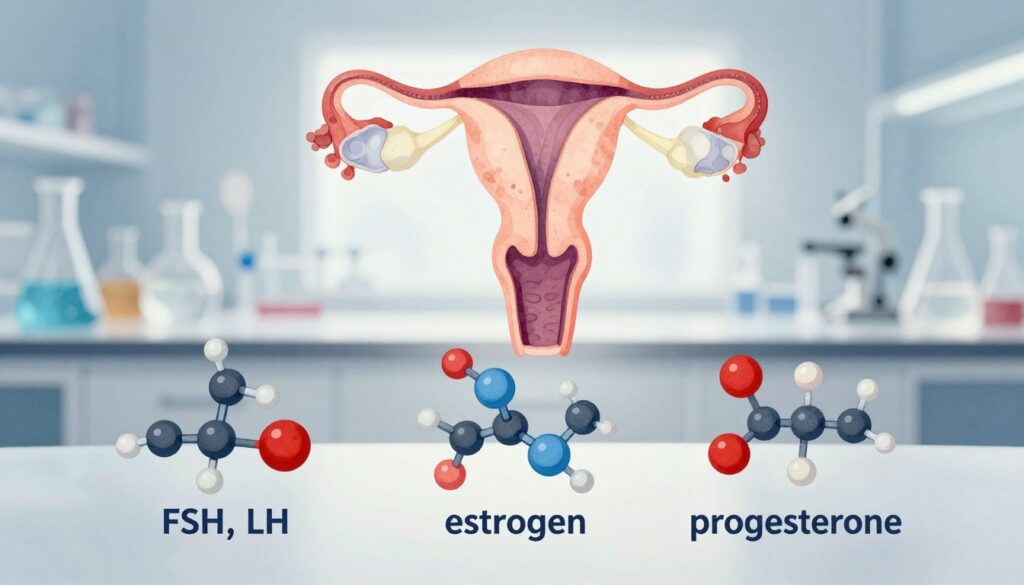
Several key hormones work together like a team. Follicle-stimulating hormone (FSH) and luteinizing hormone (LH) originate from the brain. They signal the ovaries to begin their work each cycle, playing a crucial role in the menstrual cycle.
Estrogen and progesterone are primarily produced by the ovaries. These hormones prepare the uterine lining for a potential pregnancy in women. Each one has a specific and critical function, affecting the levels of hormones in the body.
Human chorionic gonadotropin (hCG) is the pregnancy hormone. Its levels rise after an embryo implants in the uterus. This network ensures all systems are ready for a successful pregnancy.
The Menstrual Cycle and Hormonal Fluctuations
The menstrual cycle is divided into distinct phases. Hormone levels rise and fall in a predictable pattern throughout these stages. This pattern signals different windows of fertility for women.
Understanding these fluctuations helps identify the most fertile days. It also allows women to recognize when their cycle might be off balance. Hormones play a crucial role in this process, as they are produced by the ovaries. Tracking these changes provides powerful insight into reproductive health and pregnancy.
Every woman experiences these hormonal shifts differently. Some notice clear physical symptoms, while others experience only subtle changes. This knowledge is a key part of the fertility journey.
Breakdown of the “hormones you need to get pregnant”
The pathway to conception relies on specific chemical messengers performing their unique roles. Each one contributes to different stages of the reproductive process.
The Functions of FSH, LH, and Estrogen
Follicle-Stimulating Hormone (FSH) originates from the pituitary gland. It stimulates ovarian follicles to grow at the cycle’s start. These follicles contain eggs for potential release, produced by the ovaries.
Luteinizing Hormone (LH) creates the crucial surge that triggers ovulation. This release sends a mature egg from the dominant follicle. After ovulation, LH helps form the corpus luteum, playing a vital role in women’s fertility.
Estrogen regulates the menstrual cycle and promotes uterine lining growth. Rising estrogen levels peak and trigger the LH surge, which is essential for pregnancy. This demonstrates how these chemical messengers interconnect in a woman’s reproductive health.
The Impact of Progesterone and hCG on Conception
Progesterone prepares and maintains the uterine lining for implantation in women. The corpus luteum produces it after ovulation, ensuring adequate levels support early pregnancy development.
Human chorionic gonadotropin (hCG) appears after a fertilized egg implants in the ovary. This chemical messenger signals the corpus luteum to continue progesterone production. Pregnancy tests detect hCG to confirm conception.
hCG also stimulates the ovaries to produce additional estrogen and progesterone. This creates a supportive environment for fetal development throughout pregnancy.
Recognizing Hormonal Imbalances and Their Effects on Fertility
Identifying a hormonal imbalance is a critical step for any woman navigating fertility challenges. These disruptions can interfere with the delicate processes required for women to conceive.
Even subtle shifts in chemical messenger levels, produced by the ovaries, can have a noticeable impact. Recognizing the signs early allows for proactive management of reproductive health.
Common Signs of Hormonal Imbalance
The most common signal is an irregular menstrual cycle. This includes unpredictable timing or unusual bleeding patterns between periods.
Other physical symptoms may also appear. These can include new or worsening acne, unexpected hair growth, or unexplained weight changes.
Some women experience extreme mood shifts or hair loss. It is important to note that not everyone feels obvious symptoms. Hormone irregularities can sometimes be silent.
Conditions That Disrupt Hormone Balance
Two primary conditions often affect fertility hormone function. Polycystic ovary syndrome (PCOS) can elevate certain chemical levels, produced by the ovaries, and prevent regular ovulation.
Thyroid gland dysfunction is another common cause. It can create difficulties with ovulation or embryo implantation, even when other levels seem normal.
These conditions are leading factors in female infertility. They highlight how interconnected our body’s systems truly are for reproductive success.
How to Test and Monitor Your Fertility Hormones
Understanding your fertility status begins with targeted testing that evaluates key reproductive markers throughout your menstrual cycle. These assessments provide objective data about ovarian function and hormonal balance.
Effective Hormone Testing Methods
Laboratory blood tests measure specific chemical messengers on precise cycle days. This timing ensures accurate assessment of ovarian reserve and ovulation patterns.
| Hormone Test | Testing Day | Normal Range | Purpose |
|---|---|---|---|
| FSH | Day 3 | 3-10 mIU/mL | Assess egg quantity |
| LH | Day 3 | 5-20 mIU/mL | Evaluate ovulation function |
| Estradiol | Day 3 | Below 80 pg/mL | Check ovarian reserve |
| Progesterone | Day 21 | Above 5 ng/mL | Confirm ovulation |
Anti-Müllerian Hormone (AMH) offers reliable ovarian reserve data at any cycle point. Normal AMH levels range from 1.0 to 4.0 ng/mL. Home monitoring includes basal temperature tracking and ovulation predictor kits.
Interpreting Your Test Results
Test results provide pieces of a larger puzzle. Individual numbers gain meaning when viewed alongside cycle patterns and clinical symptoms.
FSH levels above 10 mIU/mL may indicate diminished ovarian reserve. LH should closely match FSH levels for optimal ovulation function. Elevated estradiol can mask true FSH levels in produced ovaries.
Your doctor may also check prolactin and thyroid function. These glands significantly impact reproductive health. Tracking menstrual cycles helps identify irregularities for specialist evaluation.
Expert Strategies for Balancing Your Reproductive Hormones
Modern medicine offers precise interventions for restoring reproductive system harmony. As Dr. Mersereau notes, “There are various ways we can treat a hormonal imbalance and increase the likelihood of conceiving and maintaining a pregnancy.” Each treatment plan is uniquely tailored to individual needs.
Medical professionals emphasize that solutions must match specific chemical irregularities. What works for one person may not suit another’s situation.
Medical Approaches and Doctor Guidance
Clinical treatments address specific gland function issues. Thyroid disorders affecting ovulation often respond well to medication. Elevated prolactin levels may require intervention to support egg release and restore hormone levels.
Fertility specialists can prescribe medications to trigger ovulation when the body struggles naturally. These targeted approaches frequently lead to successful pregnancy outcomes. Regular menstrual cycles typically indicate proper chemical balance and optimal hormone levels.
Lifestyle Adjustments to Support Hormonal Health
Daily habits significantly influence reproductive chemistry and hormone levels. Nutrition, exercise, and stress management all contribute to system equilibrium. These practices work alongside medical treatments.
Be cautious with herbal supplements since they lack FDA regulation. Some may unexpectedly harm fertility levels. Professional guidance ensures safe, effective approaches to conception goals.
Medical experts provide answers without exhausting personal resources. Their personalized strategies combine testing data with individual health history for optimal results.
Conclusion
Your body’s fertility potential is governed by a sophisticated system of interconnected chemical regulators. Understanding how these messengers work together provides valuable insight into reproductive health. Regular menstrual cycles often indicate proper hormone levels and balance, while irregularities may signal underlying issues.
This knowledge empowers you to recognize when medical guidance could be beneficial. Tracking cycle patterns and monitoring symptoms helps identify potential hormonal imbalances early. Working with a healthcare provider ensures personalized assessment and appropriate treatment options.
Fertility challenges related to chemical imbalances often respond well to targeted interventions. The journey toward building a family may require patience and professional support. Understanding your body’s unique signals is the foundation for making informed decisions about reproductive health and hormone levels.