Transform Your Body: Home Workout 7 Minutes a Day

Can a single short routine truly change your shape and energy? This guide gives you a clear, realistic path to fit consistent exercise into a busy life.
The classic 7-minute circuit uses 12 moves, mostly bodyweight, done in short bursts with brief rests. Many people repeat the cycle two or three times to extend the session to 14–21 minutes when they can.
You’ll find simple setup tips — just a chair, a wall, and a small patch of floor — plus plain-English form cues so you move with confidence. You’ll also learn how to pace effort so progress comes without injury.
Key Takeaways
- You can use a minimal space and minimal gear to get a solid routine.
- The 12-move circuit is efficient and repeatable for short time slots.
- Proper form and controlled intensity matter more than speed.
- Repeating the circuit boosts results while keeping sessions brief.
- Set simple weekly goals so this becomes a lasting habit.
What the 7-minute workout is and why it works
This compact routine uses timed bodyweight intervals to tax large muscle groups and raise your heart quickly.
Developed in 2013 by exercise physiologist Chris Jordan and published in ACSM’s Health & Fitness Journal, the protocol stacks 12 familiar moves into short, intense rounds.
A science-backed full-body approach
The structure is simple: 30-second efforts followed by 5–10 seconds rest. That rhythm blends strength and cardio in one session.
How short intervals drive results
Working in 30-second bursts keeps your heart rate up while the tiny rests let you push near 8/10 on the perceived exertion scale.
“The protocol targets large muscles, promotes balanced strength, and elevates heart rate with minimal rest.”
Setting realistic expectations
You can improve baseline fitness, build some muscle, and support fat loss if you pair these sessions with consistent training and proper nutrition.
For specific performance goals or large physique changes, add volume, resistance, or varied sessions. As you get fitter, the same timed work becomes more productive — that increased quality is real progress.
| Feature | Format | Primary benefit |
|---|---|---|
| Protocol origin | 2013 ACSM research | Science-backed design |
| Exercise format | 12 bodyweight moves | Full-body strength and cardio |
| Timing | 30 seconds on, 5–10 seconds off | High training density, raised heart rate |
What you need and how to prep your space at home
Prepare a safe, clear area so you can move smoothly from one exercise to the next. A small setup saves time and keeps your focus on form.
Simple equipment checklist
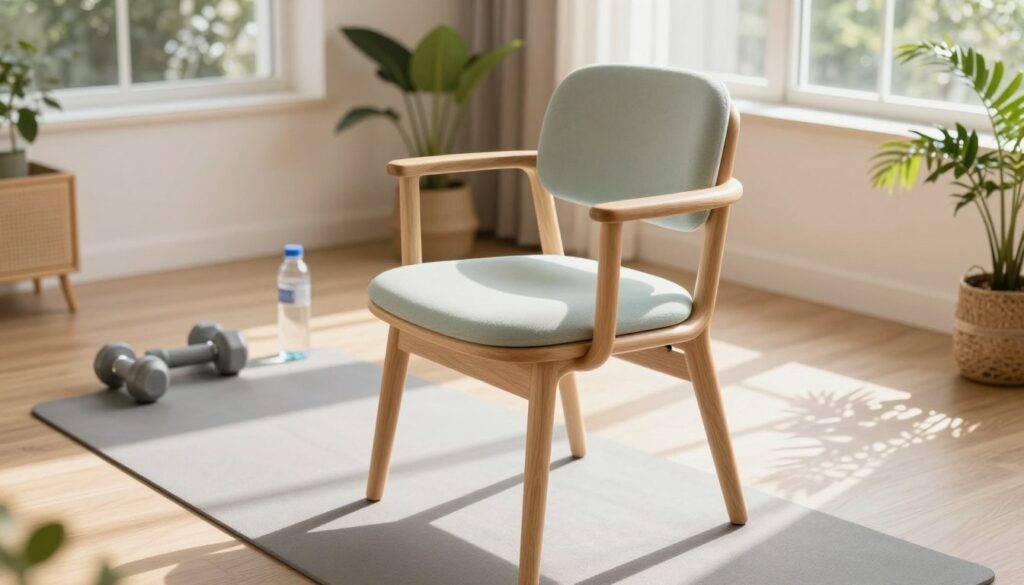
- One sturdy chair or bench that won’t slide; test its stability and weight capacity.
- A clear section of wall for wall sits and to brace against during balance moves.
- Non-slip floor space, ideally with a mat to protect knees and the rest of your body.
Warm-up basics to protect knees, shoulders, and back
Start with 3–5 minutes of gentle movement. Do joint circles, easy marching, and bodyweight squats to reach range of motion without strain. These exercises are great for a full-body workout.
Make sure your knees track over toes during squats and lunges, and keep a neutral spine to protect your back. Position your shoulders down and back for push variations to get heart rate up.
Scale the session to your fitness level by reducing range, slowing tempo, or taking slightly longer rests. If you have pain or a medical condition, consult your doctor before you begin any new workout, including this 7-minute workout.
How to do the classic 7-minute circuit at home
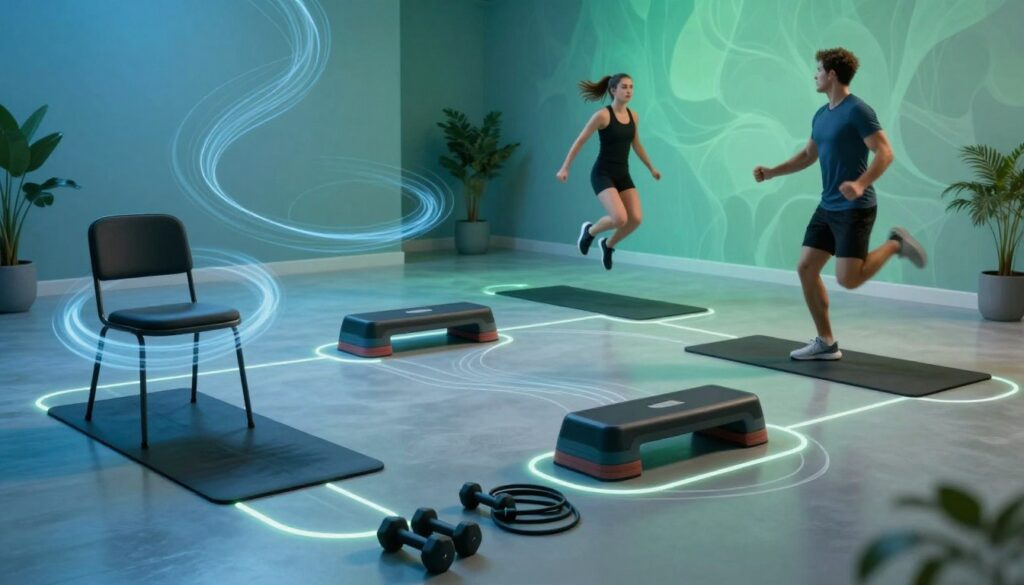
Set a timer, keep rests short, and flow through each station to keep effort high and form clean. You follow the traditional order so muscle groups alternate and transitions stay tight.
Jumping jacks start the set: legs out and in while arms go overhead, 30 seconds at your pace to enhance your workout routine.
Wall sit next: back to the wall, feet hip-width and slightly forward; slide until knees are near 90 degrees, hold 30 seconds to build strength in just a few minutes.
Push-ups for upper body: hands under shoulders, lower with back level; modify on knees or elevate feet, 30 seconds to maximize your exercise efficiency.
Crunches train your core: knees bent, press low back into the mat and reach toward knees for 30 seconds to strengthen your position.
Step-ups onto a chair alternate lead leg stepping fully onto a sturdy chair for 30 seconds to raise heart rate and leg strength during your 7-minute workout.
Squats follow: feet shoulder-width, hinge hips back, drive from heels, 30 seconds to enhance your workout routine.
Triceps dips on a chair target arms and shoulders—hands on the edge, lower then press up, 30 seconds to get heart rate up.
Forearm plank holds core and back stability for 30 seconds; keep a straight line from head to heels to maintain a strong position.
High knees run in place, drive knees up fast for 30 seconds to spike heart rate and enhance your workout.
Lunges alternate legs with ~90-degree knees for 30 seconds to work balance and lower body control during this 7-minute workout.
Push-ups with rotation add side core work: push-up then rotate and reach up, alternate sides for 30 seconds to maximize your exercise routine.
“Finish with a side plank: hold ~15 seconds each side, elbow under shoulder and body straight.”
- Use 30-second exercise seconds and very short rest to keep heart rate up.
- Focus on knees tracking over toes and steady position to avoid injury.
How hard should you push in 7 minutes?
Finding the right effort level keeps each short session useful and safe. Use a simple self-check to set intensity so you progress without injury.

Using RPE to aim for high intensity without burning out
Rate your effort on the RPE scale. Aim for about an 8/10 during each 30-second burst.
This level is hard but controlled. Use the brief rest to breathe and reset posture so you can keep good reps.
Heart rate cues and form checkpoints to stay safe
Watch practical heart rate cues: you should feel your heart working and be breathing hard, yet still move with control.
Make sure key positions stay steady. Check knees in squats and lunges. Check shoulders for push variations and dips. Check your back during planks and crunches.
“Intensity is earned by controlled work and minimal wasted motion, not by rushing sloppy reps.”
| Cue | What to look for | Quick fix |
|---|---|---|
| RPE rate | About 8/10 during work | Slow tempo or reduce range |
| Heart rate | Elevated but controlled breathing | Use the 5–10 second rest to reset |
| Form checkpoints | Knees, shoulders, back position | Choose a modification to keep quality |
Home workout 7 minutes a day: how to build a weekly plan that gets results
Map out your week so short circuits add up to measurable fitness gains without overwhelming your schedule.
Start by choosing how many rounds you’ll do per session. The protocol is most effective when repeated 2–3 times (about 14–21 minutes total). That extra time increases minutes under tension and keeps your heart rate higher for longer.
When to repeat the circuit for maximum benefit
Do 2 rounds on lighter recovery days and 3 rounds when you feel strong. Track how many times you complete the 7-minute workout circuit each week; consistency matters more than perfect intensity.
Progression ideas
Reduce rest between stations, add reps inside each 30-second window, or increase range of motion. Swap in harder variations—like elevated push-ups or single-leg moves—to add load without extra equipment.
Who this plan fits and when to add variety
This plan suits beginners and busy people building habits. It’s a practical full-body workout using body weight to support strength and weight-loss goals.
“If the same set no longer challenges your muscles or your heart rate stays low, introduce new exercises or add resistance to advance performance.”
- Weekly frequency: pick 3–6 sessions based on recovery.
- Safe progression: change one variable at a time.
- When to expand: add targeted training for specific performance goals.
Conclusion
End by turning intention into action—book your next session and set a repeat count for your workouts. Keep effort honest and focus on clean form so short circuits deliver real benefits during your 7-minute workout.
Your setup needs only a sturdy chair, a clear wall, and a small floor patch. That minimal gear is enough to train strength and improve fitness without extra cost, allowing you to perform various exercises effectively.
Warm up, scale movements when needed, and check your heart rate during work. If you have health concerns, consult a clinician before higher-intensity exercise to get heart health in check.
Track progress by doing more quality work in the same intervals, recovering faster, and moving with better control in just a few minutes. Treat this plan as a foundation you can build on over time.