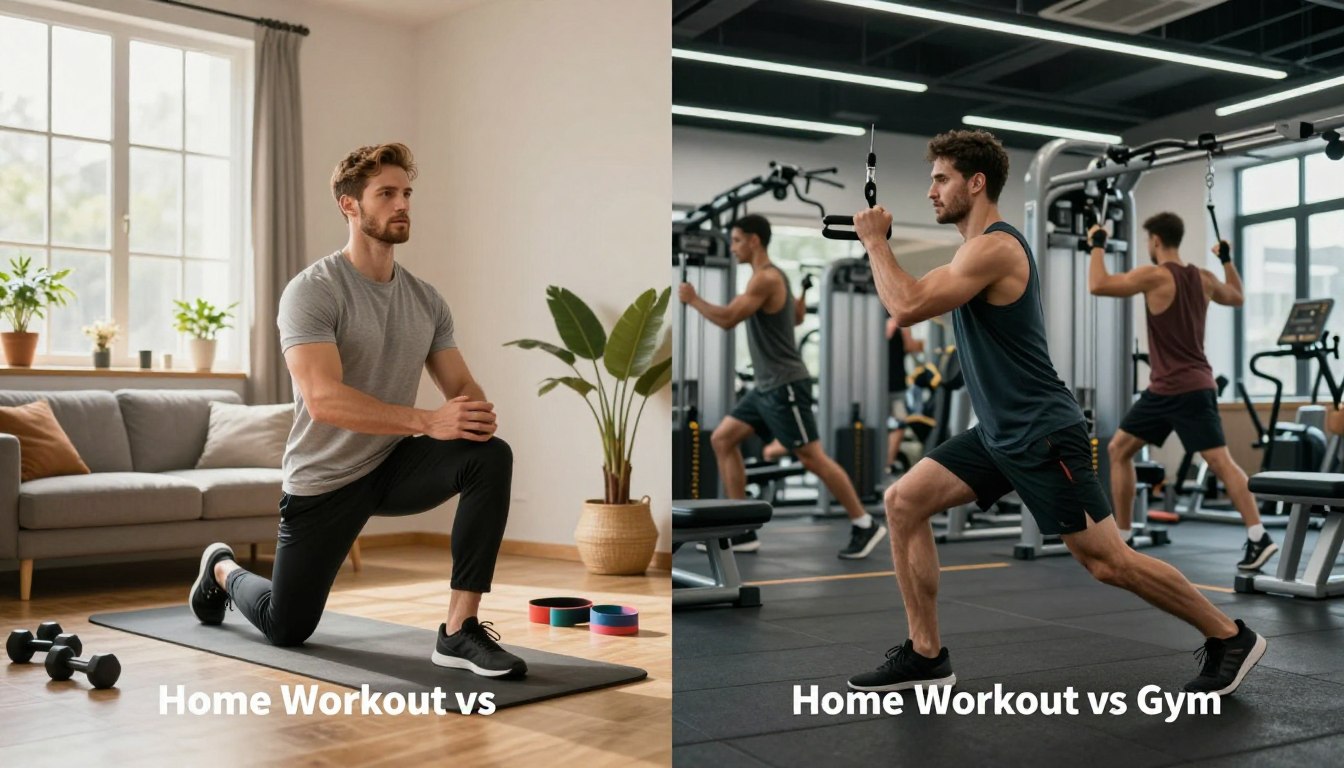
Can one simple choice change whether you stick to a plan and reach your fitness goals?
You don’t need a perfect setup to get results. What matters most is consistency. Whether you train at your home workouts or the gym, the true test is whether you keep showing up for your workouts. This article will compare time, convenience, cost, equipment, motivation and community, and how each option fares for strength and cardio. You’ll see real-life friction points — distractions at your place versus commuting and waiting at public gyms — and how those affect results.
Later, you’ll get a US-oriented cost breakdown and practical setup ideas so you can match choices to your budget, space, and goals. The final section gives clear steps to build a routine you will actually follow, no matter which side you pick.
Key Takeaways
- Consistency beats the perfect location for long-term progress.
- We’ll weigh time, cost, gear, motivation, and training effects.
- Real-world frictions shape your ability to stick with exercise.
- You’ll get a US cost snapshot and practical gear ideas.
- Actionable next steps will help you build a sustainable routine.
How to Decide Between Home Workouts and Gym Workouts for Your Fitness Goals
Pick a setting that removes the most barriers to regular exercise. Start by asking a simple question: where will you actually show up on low-energy days? Follow-through matters far more than a perfect plan.

Start with adherence: where you’ll show up
Choose the environment that helps you keep a consistent routine. If chores, kids, or a noisy space derail you, at-home sessions may struggle. If commuting or limited hours make you skip days, a nearby facility may win.
Match the setting to your daily schedule
Think about when you train: early mornings, late nights, split sessions, or unpredictable shifts. Flexible times favor at-home plans; fixed-class slots and equipment access favor outside facilities.
Use practical filters: budget, space, and access
Quickly narrow your options by cost, available floor space, and safe nearby access. If your budget or space is tight, prioritize minimal gear or community-based classes for your home workouts. If you need external structure and fewer distractions, paying for a gym membership can give you that push.
Motivation matters: if community lifts you, choose a place with people and coaching, especially in group classes. If privacy reduces anxiety, pick the quieter route that keeps you consistent with your fitness goals.
home workout is better or gym: What You Really Get With Each Option
Your choice shapes outcomes. It affects how often you train, how hard you push, and whether you make steady gains over weeks.
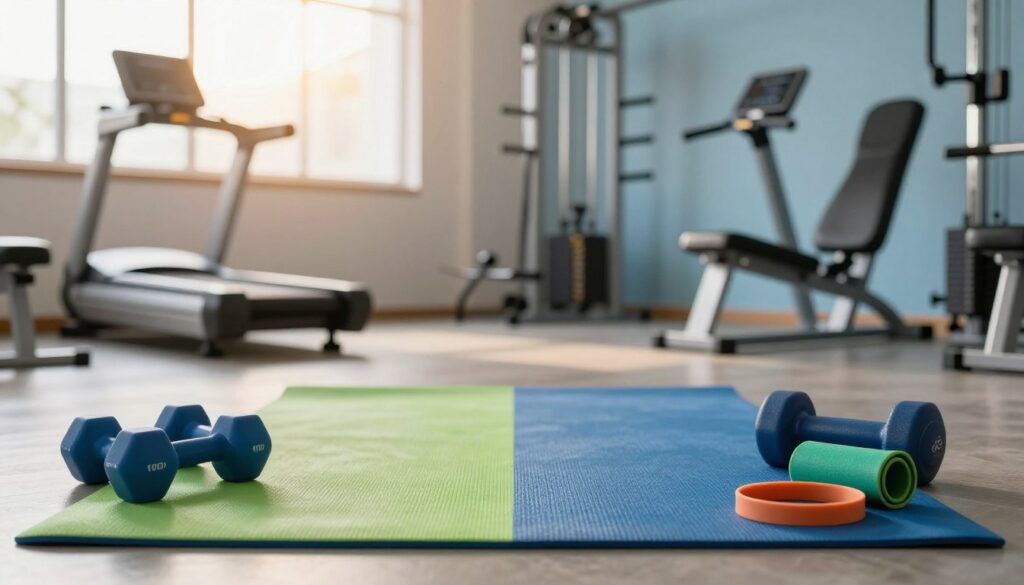

Convenience vs. focus
Pros: Training at your place removes commute, packing, and waiting. That convenience makes short sessions and last-minute moves more likely.
Cons: The same space brings distractions that shorten sessions and lower intensity. TV, chores, or interruptions can erode progress.
Flexibility vs. structure
Access anytime supports flexible scheduling for your workouts, but it also asks you to build a routine. A facility provides set hours that can act as a habit trigger for your fitness journey.
- No commute and instant access = higher session frequency if you stay disciplined with your home gym workouts.
- Drive time, parking, and locker-room hassle add friction but create a focused environment that nudges you to train harder at the gym.
Both options deliver results. Translate features into outcomes: pick the path that boosts your consistency, intensity, and week-to-week progression in your exercise routine. The next sections dig into time, cost, equipment, and motivation to help you decide between working home and gym workouts.
Time and Convenience in the Real World
Minutes matter: small differences in prep and travel often decide whether you train today.

At your place: start fast, fit sessions into gaps
No commute means you can begin in minutes. That makes short circuits and quick strength sets practical between meetings or chores.
If you are working home or managing kids, short 10–20 minute circuits, stair sprints, or dumbbell sessions remove a common barrier.
At a facility: extra hassle time, fewer interruptions
Trips to a gym add packing, driving, parking, and changing. Expect 15–45+ minutes of extra logistics depending on distance and traffic.
Still, a dedicated space often shields you from household interruptions. That focus can raise intensity for heavy lifts or machine-based sessions.
| Task | At your place (min) | At a facility (min) |
|---|---|---|
| Prep & start | 0–5 | 15–30 |
| Travel/parking | 0 | 10–30+ |
| Changing/locker | 0–2 | 5–10 |
| Session focus | Variable (easy to interrupt) | Higher (fewer at-home distractions) |
Pick the option that makes starting simpler. Starting is often the hardest part on a busy day. The most repeatable plan wins for long-term consistency in your exercise routine.
Cost Breakdown: Home Gym Setup vs Gym Memberships in the United States
A clear money comparison helps you pick a sustainable plan. Think in months, not lists: compare recurring dues to a one-time setup and occasional upgrades.

Gym memberships: monthly fees from budget gyms to premium clubs
Monthly membership fees vary widely in the US. Budget chains can run around $10/month while premium clubs often exceed $100/month.
Remember hidden charges: initiation fees, class add-ons, and travel time can raise your effective spend.
Home gym costs: one-time equipment purchases and payoff timeline
A starter home gym often pays for itself after several months of gym workouts. A basic kit (adjustable dumbbells, bands, mat, stability ball) might cost a few hundred dollars, making it a viable option for those considering the pros and cons of a home gym vs. gym memberships.
Use the payoff timeline: divide the starter cost by your monthly membership fee to see when the up-front buy becomes cheaper compared to regular gym workouts.
Low-cost home options: bodyweight, bands, and basic gear
You can get strong without heavy weights. Bodyweight progressions, resistance bands, and tempo changes deliver real results with minimal spend, making this a great way to exercise at home.
Weigh space trade-offs and replacement costs against monthly memberships at gyms. If you value variety and amenities, a membership can offer better value; if long-term savings matter most, a home gym setup often wins, especially when considering the pros and cons of each option.
| Option | Typical US Range | Notes |
|---|---|---|
| Budget membership | $10/month | Basic access, fewer classes |
| Premium membership | $100+/month | Classes, amenities, higher fees |
| Starter home gym | $200–$600 | Adjustable weights, bands, mat |
Equipment, Variety, and Workout Options
Choosing gear and program access shapes how you train more than you may expect. Some spaces offer near-endless machines and heavy plates, while compact setups rely on versatility and tech to keep things fresh.
What large facilities bring to your programming
Sheer selection: treadmills, ellipticals, stair climbers, bikes, and rowers cover many styles of cardio.
Strength options: machines, free weights, cable systems, and specialty rigs support heavy lifting and precise progressions.
High-value compact gear for small spaces
Adjustable dumbbells, kettlebells, resistance bands, and a foldable rack let you build real strength without a big footprint.
Tip: prioritize multi-use pieces that replace single-purpose items.
Expand variety without buying more equipment
- Use apps and livestream classes to rotate programs and maintain motivation.
- Follow short videos for technique, or try exergames and jump-rope intervals for quick cardio bursts.
- Mix outdoor runs, brisk walks, and yoga sessions on a mat to balance mobility and strength.
Planning when space is tight
Pick foldable, storable gear and prioritize weights that scale. Store items under a bed or in a closet to free shared rooms.
“Versatile tools and consistent programming often trump owning every machine.”
| Feature | Typical Benefit | Space Impact |
|---|---|---|
| Cardio machines | High variety, steady-state options | Large |
| Free weights & cables | Progressive overload, strength gains | Medium–Large |
| Adjustable dumbbells/kettlebells | Versatile strength options | Small |
Choose based on what keeps you consistent: if variety and instructors keep you engaged, look for places with classes. If mixing formats excites you, apps, videos, and a compact kit will go far.
Motivation, Community, and Environment
Where you exercise shapes your habits more than raw willpower. Your setting nudges behavior. That means the right place can make showing up easier.
Group classes and instructors
In-person classes give structure, coaching cues, and a scheduled commitment. A real coach corrects form and keeps sessions focused.
That scheduled slot makes skipping harder. For many people, a set class time beats vague intentions.
Community and the “show up” effect
Being near others creates friendly competition and accountability. When people around you train hard, you tend to match their effort.
That shared energy and community often increases consistency over months.
Privacy, comfort, and solo focus
If you feel self-conscious, quiet space in your work home or home gym helps you concentrate. Privacy reduces social pressure so you can try new moves without worry, weighing the pros cons of different workout environments.
You can recreate accountability at your place with shared calendars, a texting buddy, or app streaks. Those tools work, but they need your initiative to make your day productive, just like at gyms.
Downsides of other people
Busy centers bring crowding, waiting for equipment, and etiquette issues like not reracking plates or leaving sweat on machines. Those frictions waste time and can break momentum.
“Pick the environment that nudges you to show up more often.”
- If community energizes you, favor a facility with classes and visible peers.
- If solitude reduces friction, set up accountability at your place and schedule sessions like appointments.
Effectiveness for Strength Training, Cardio, and Overall Health
What really moves the needle is consistent effort, clear progression, and steady intensity. Your results depend on how you plan sessions, not the building you use. Consistent training that raises effort over time builds muscle and supports long-term health.

Strength gains: heavy access vs smart progression
Gyms make heavy lifts straightforward with barbells, racks, and specialty plates. That equipment helps you push very heavy loads safely during your workout.
At your work home, you can still drive progress without massive plates. Use adjustable dumbbells, bands, tempo changes, added sets, or shorter rests to force adaptation.
Cardio options that work
Cardio machines offer convenience and steady pacing. But stairs, jump rope, brisk walking, jogging, and dance deliver real cardiovascular benefit with minimal gear.
Short bursts and intervals at moderate-to-high effort raise heart rate and support health just like longer steady sessions.
Short sessions stack up
Research and practical guidance, including advice from Dr. Justin Thompson, show three 10‑minute workout bouts can match one 30‑minute block. This helps when your schedule fragments.
Aim to reach CDC-style targets over the week: about 30 minutes most days of workout. Consistent, progressive effort produces lasting gains in strength, cardio fitness, and overall health.
“Effectiveness comes from consistent progression, not the place you train.”
| Goal | Typical Advantage | When facility helps |
|---|---|---|
| Maximal strength | Access to heavy plates and racks | When you need very heavy loads |
| Muscle growth | Progressive overload via many methods | Both settings work with smart plans |
| Cardio fitness | Machines or creative outdoor/indoor options | If you need precise pacing or classes |
Building a Home Workout Routine You’ll Actually Stick With
A practical routine begins with a simple space and a clear schedule. Make a plan that cuts friction so you show up on low-energy days.
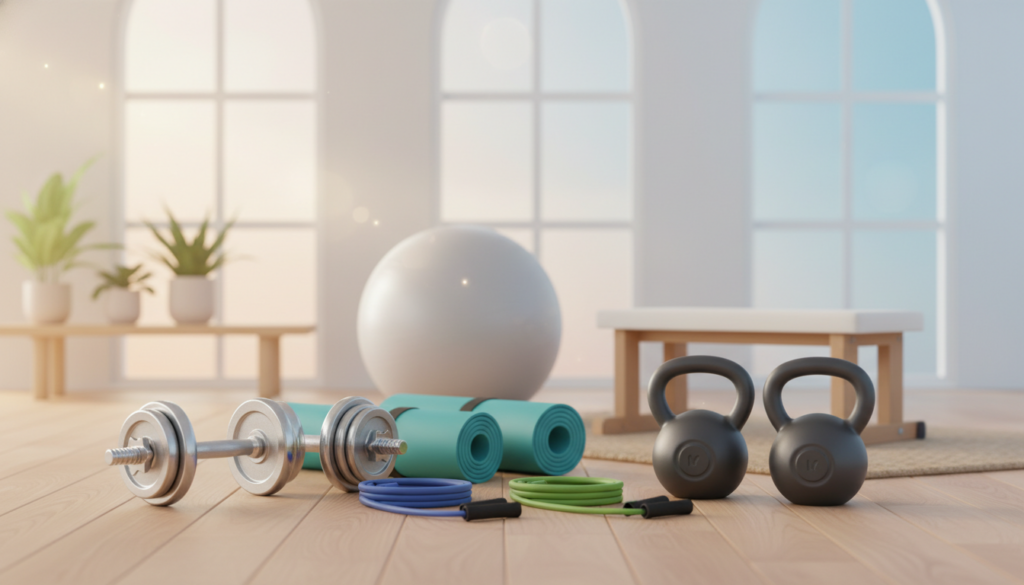
Set up your space
Checklist: clear a spot for a yoga mat to create a dedicated workout area, keep at least one arm’s length all around, and store gear in a single bin so you don’t negotiate clutter each day.
Minimum guidance: enough space for a workout mat and to swing your arms without hitting anything. That small room makes movement safe and repeatable.
Plan and schedule
Put sessions on your calendar and use alarms or tracking apps. Treat training like an appointment you can’t skip.
Pick one simple metric to track progress and log it in an app or shared note. A friend check-in once a week boosts follow-through.
Safety and consistency
Warm up with walking or jumping jacks before your workout. Cool down with light movement and stretching. Prioritize form before adding intensity.
If you have a medical condition or are returning from injury, check with your doctor before ramping up.
Avoid derailers
Beat boredom by rotating content and short formats. Reduce excuses by prepping gear the night before and setting a minimum weekly target tied to your goals.
| Item | Benefit | Space/Time |
|---|---|---|
| Yoga mat + clear zone | Safe full‑range movement | 2m x 1m / instant |
| Phone calendar + app | Consistency and tracking | Digital / 2 min setup |
| Accountability check | Higher adherence | 5–10 min weekly |
| Warm-up & cool-down | Injury prevention | 5–10 min each |
Conclusion
Sustainable progress depends on showing up more than having perfect gear.
Decide by reducing your biggest friction. If maximum convenience and schedule flexibility win, choose a home plan. If you need structure, community, and varied equipment, pick a nearby gym or a membership with classes.
Remember the key pros and cons: at-place sessions save time and money long term but demand self-drive; facility access adds focus and variety but costs more and takes travel time. A hybrid approach works well — use a membership for heavy lifts and rely on short sessions at your home on busy days.
Action step: pick one option today, schedule the first week, choose the gear or class format you will use, hydrate during sessions, and reassess after 30 days. The best plan fits your day and keeps you training for long-term health.