Define the goal. You want a smaller waist and lower overall body fat, not just sore abs. This guide shows how a steady plan can trim your measurements and improve strength.
Scope and principle. You’ll use no-equipment cardio and strength-focused moves that fit a small space. Remember: you can’t pick where fat comes off first, but you can control habits that reduce body fat.
What “proven exercises” means. Expect movements that recruit large muscle groups, raise your heart rate, and work well in tight rooms. These exercises boost calorie burn and support steady weight loss when paired with proper nutrition, helping people to lose belly fat effectively.
What to expect next. Clear workout routines will follow this week. You’ll learn how to progress, track results, and pair meals and sleep habits with training. No quick fixes — just research-backed, practical steps to reduce belly fat and achieve your weight loss goals.
Key Takeaways
- Targets: reduce waist size and overall body fat, not spot reduction.
- Use no-equipment cardio plus strength moves for best calorie burn.
- You can’t control where fat drops, but you can control habits.
- Proven moves recruit big muscles and raise heart rate.
- Combine regular sessions with nutrition and lifestyle for results.
Why belly fat matters for your health and longevity
Your waist size is a key health signal, not just an aesthetic detail. A larger midsection links to higher risk of chronic illness and earlier death, so measuring the waist is a simple way to track real health changes.

Research on waist circumference and mortality
The British Medical Journal pooled data on about 2.5 million people and found a clear trend: for every 4 inches (10 cm) added to waist size, the risk of early death rose by roughly 11%. This is a measurable, actionable statistic.
How excess abdominal fat impacts disease risk
Extra belly fat correlates with high cholesterol, high blood pressure, heart disease, diabetes, and stroke, according to study authors such as Tauseef Ahmad Khan at the University of Toronto.
| Why it matters | Health risk | What you can track | Practical action |
|---|---|---|---|
| Central fat stores | Heart disease & stroke | Waist circumference (inches or cm) | Measure monthly and record |
| Metabolic impact | Type 2 diabetes | Fasting glucose or A1c | Improve diet and activity |
| Blood markers | High cholesterol & BP | Lipid panel, blood pressure | Consult clinician if elevated |
Note: Your weight or BMI can miss risk tied to where fat sits. This plan targets whole-body fat loss that reliably reduces belly fat over time and improves those cardiometabolic markers.
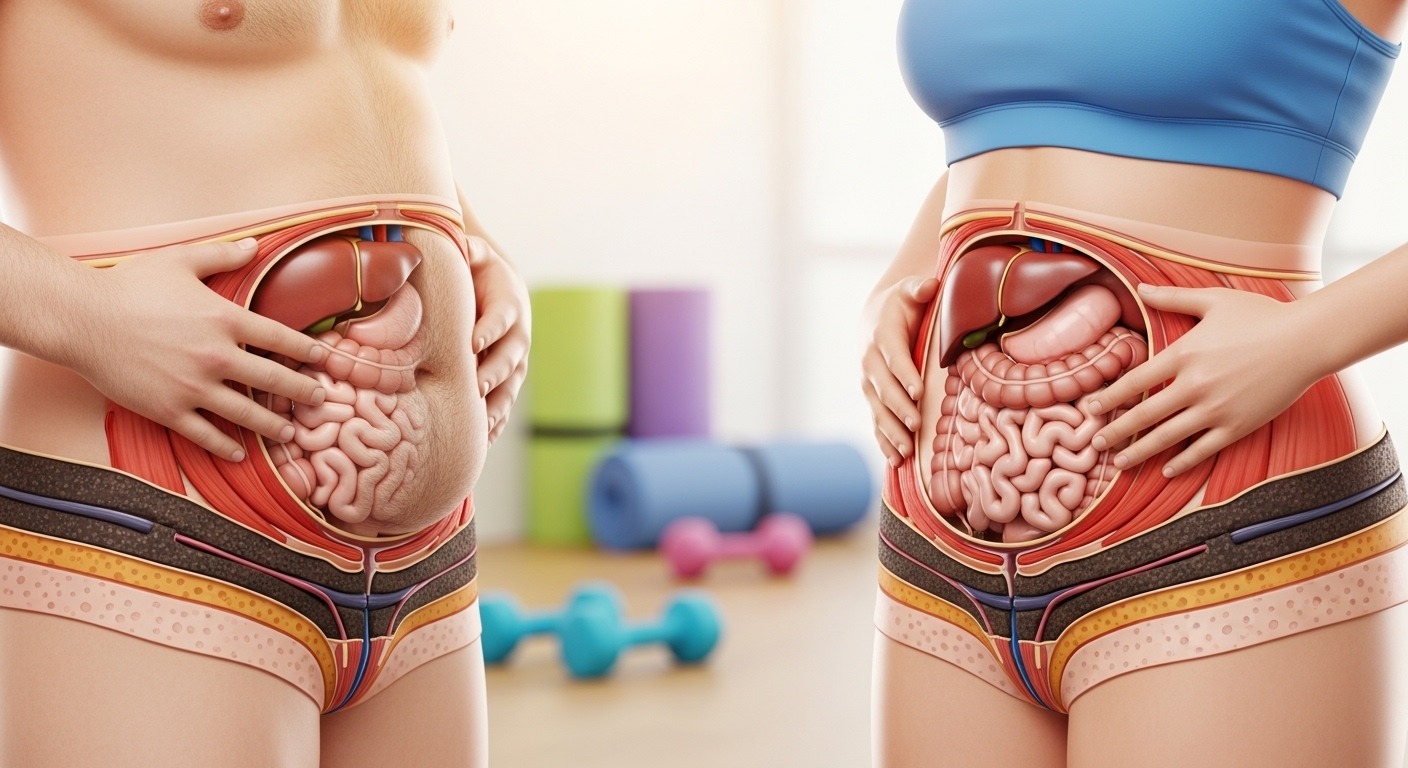
Understanding belly fat: subcutaneous fat vs visceral fat
Not all midsection tissue is the same; two distinct types sit under your skin and around your organs. Knowing the difference helps you prioritize habits that improve health and shrink your waist over time.
Subcutaneous fat and what it typically means
Subcutaneous fat lies just under your skin. It feels soft and is the layer you pinch.
This type of fat is generally less harmful and often the last to change when you reduce overall body fat.
Visceral fat and why it’s metabolically active
Visceral fat wraps around organs inside the abdomen. Harvard Health notes it carries higher risks for heart disease and diabetes.
Why it matters: visceral tissue releases inflammatory signals that can disrupt hormones involved in appetite and mood.
How stress and cortisol can influence belly fat and appetite signals
Chronic stress raises cortisol, which can increase cravings and promote more stored abdominal fat.
That hormonal loop makes it harder for you to control eating and weight if sleep and stress management are ignored.
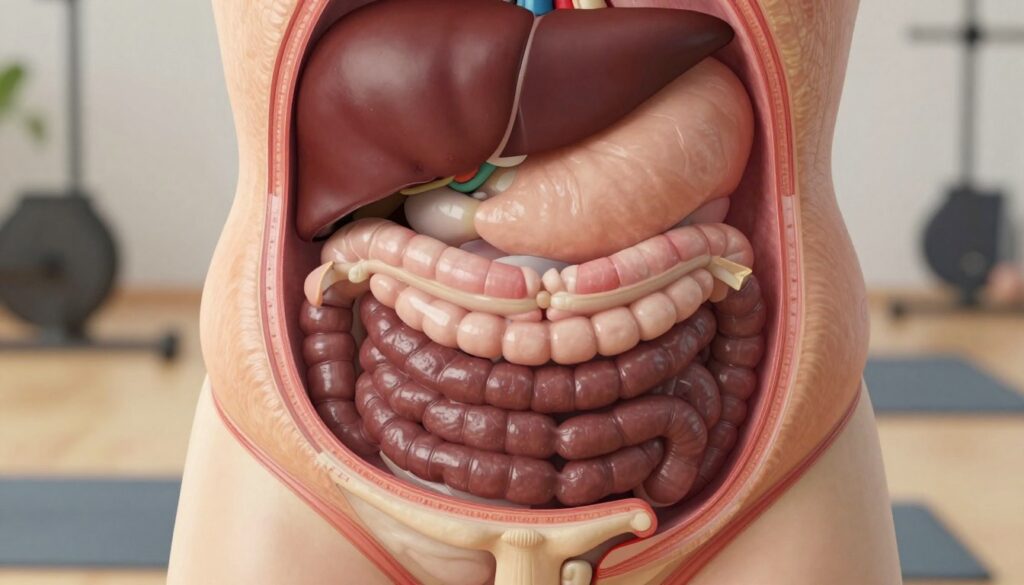

- Distinguish the soft under-skin layer (subcutaneous fat) from deeper organ-wrapping stores (visceral).
- Recognize that visceral fat is metabolically active and linked to higher health risk.
- Address stress and sleep alongside training; they influence hormones and cravings.
Practical takeaway: your goal should be reducing total body fat. Over time, that lowers both types and improves waist measurements and health markers.
Set the right expectation: you can’t spot-reduce belly fat
Crunch-heavy workouts promise quick results, but research tells a different story about weight loss. Many online plans focus on abdominal exercises, yet studies show this approach rarely changes waist measurements or helps lose belly fat.
Why ab-only training falls short
Spot reduction is the idea that training one area will make local fat disappear first. Trials contradict that claim.
A six-week program of daily abdominal exercises (2 sets of 10 reps, five days per week) produced no meaningful change in body weight, body fat percentage, abdominal circumference, or skinfolds.
What the evidence means for your plan
Ab sessions build strength and core endurance. They do not, by themselves, erase the layer of fat over your muscles.
| Study length | Protocol | Measured outcomes | Result |
|---|---|---|---|
| 6 weeks | Ab-only, 2×10 reps, 5 days/week | Waist, skinfolds, body fat | No significant change |
| 12 weeks | Ab exercises vs diet change | Abdominal circumference, fat loss | No added belly reduction from ab work |
| Older sit-up programs | High-volume ab drills | Overall adiposity | No meaningful difference |
- Ab training strengthens muscles but won’t make the layer above them vanish.
- Your waist shrinks as overall body fat percentage drops.
- Next, you’ll learn plans that recruit large muscles and burn more calories.
What actually works: a calorie deficit plus training for full-body fat loss
An effective plan centers on a steady energy deficit combined with strength and cardio work.
How energy deficit drives fat loss and reduces waist size over time
Put simply: if you burn more calories than you consume, your body taps stored energy and lowers overall body fat.
This process reduces waist size over weeks and months rather than overnight.
Why exercise alone isn’t the full plan for a flatter stomach
Hard sessions raise daily expenditure, but they won’t overcome consistent excess calories.
If calories in regularly exceed calories out—often via snacking or big portions—weight plateaus despite effort.
- Sensible pace: aim to lose about 1–2 pounds per week for sustainable change and preserved muscle.
- Role of training: exercise increases total calorie burn, keeps muscle mass, and makes the plan easier to follow.
- Expectation: focus on repeatable habits, not crash tactics that are hard to maintain.
Next up: combine cardio and strength so you burn calories now and protect metabolism with muscle for continued fat loss.
How to structure home workouts to lose belly fat for maximum calorie burn
Mixing cardio intervals and strength moves creates a simple framework for steady calorie burn while protecting muscle. Alternate sessions or combine them in a single circuit so you get both immediate calories burned and long-term metabolic benefits.
Cardio vs strength and why both matter
Cardio raises heart rate and burns more calories per minute. Strength training builds and preserves muscle that supports body composition over time, which is essential for those looking to lose belly fat effectively.
Rotate higher-intensity cardio workouts with resistance-focused exercise sessions, or pair short cardio bursts inside strength circuits for added workload that can help you lose belly fat.
Why HIIT is time-efficient
Research summaries show HIIT can burn up to ~30% more calories than longer steady sessions when time is equal. A practical pattern is 20 seconds hard work, 40 seconds rest, repeated through rounds.
Quick template and prioritization
Choose 4–6 compound moves. Work 20–40 seconds, rest 20–40 seconds, repeat 3–5 rounds. Progress by adding rounds, shortening rest, or increasing work intervals.
- If you lack equipment, use bodyweight compound moves (squats, lunges, push-ups).
- If space is tight, use in-place cardio like high knees or mountain climbers.
- Prioritize the schedule you can repeat weekly; consistency beats complexity.
Exercises that won’t burn belly fat the way you think
Feeling a burn in your abs doesn’t mean the layer over them is shrinking. That sensation shows muscle work, not local fat loss.
Why endless sit-ups and crunches build muscle but don’t erase the layer on top
Crunches and sit-ups strengthen your core and improve endurance in your workout routine. You will feel the muscles working and may gain definition under a lower body fat level, helping you lose belly fat.
But, these exercises do not melt the outer layer alone. Fat reduction is systemic. Calories in versus calories out govern actual loss, so to lose fat effectively, you need a balanced approach.
Common “flat stomach” mistakes that stall progress
- Relying on ab-only sessions and skipping full-body strength.
- Ignoring calorie balance and eating without tracking.
- Being inconsistent week by week.
- Believing rep-heavy programs sell a quick fix.
| Mistake | Why it fails | Practical fix |
|---|---|---|
| Ab-only routines | Low overall calorie burn | Add compound moves that raise heart rate |
| No strength training | Loss of muscle and slower metabolism | Include resistance sessions 2–3x weekly |
| Ignoring diet | Excess intake cancels training | Track portions and protein intake |
Keep some core work for posture and function, but center your plan on higher-output exercises burn and full-body strength. Next, you’ll see efficient cardio and strength choices that help burn belly and improve results.
Best no-equipment cardio moves to burn belly fat at home
Choose cardio moves that push your heart rate up fast and use big muscle groups for better calorie output. That approach gives you higher intensity in less time and helps you burn belly fat more efficiently.
Burpees and fast variations that spike heart rate
Burpees recruit legs, core, and shoulders and raise heart rate quickly. The American College of Sports Medicine notes that 10 fast burpees can rev your metabolism like a 30-second all-out sprint, making them an effective exercise to lose belly fat.
Rotate burpee with push-up, X-burpee, bunny-hop burpee, or mountain-climber burpee to match your level and keep workouts fresh. These exercises help target belly fat while also engaging your arms and core.
Mountain climbers: a moving plank for control
Mountain climbers act like a moving plank. They challenge shoulder stability and core control while staying highly intense. Use them inside circuits for steady calorie demand.
Quick in-place burners and low-cost alternatives
High knees, butt kickers, jumping jacks, and skaters let you build compact workout circuits in small spaces. Add jump rope or stair climbing for steady or interval exercise work to help lose belly fat.
When you can’t access a pool, try “air swimming” patterns—high-rep arm and leg cycles—to mimic swimming energy use without equipment and effectively target belly fat.
Best strength training moves at home to build muscle and increase fat loss
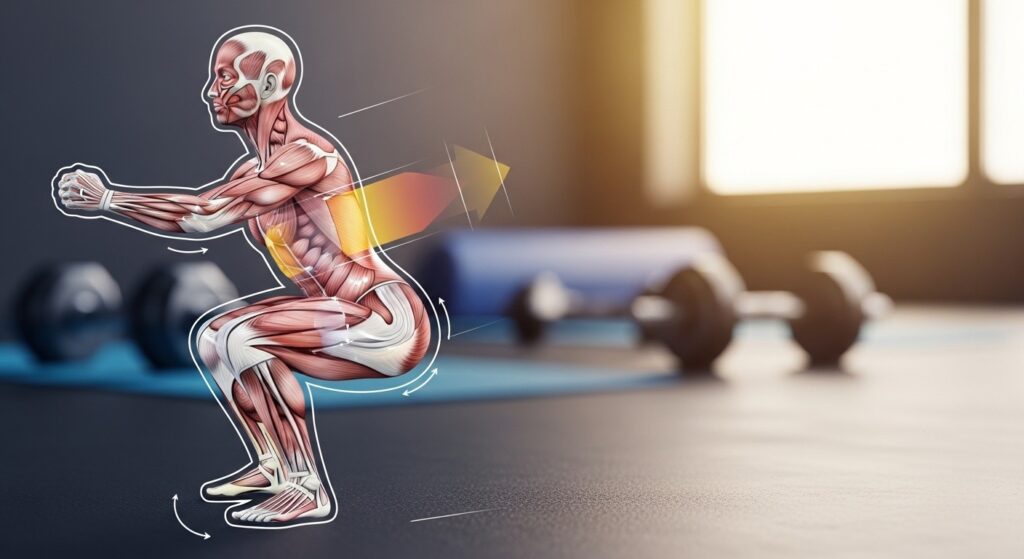

Focusing on compound strength moves gives you the biggest return for time spent training. These exercises recruit large muscle groups and raise resting calorie use while improving posture and function.
Squats and squat jumps
Squats target major leg and lower body muscles. They build strength and help shape your silhouette.
Progress with tempo changes, paused reps, or squat jumps for added power and metabolic stress.
Lunges and split-squat variations
Reverse lunges, curtsy lunges, and Bulgarian split squats train single-leg strength and balance.
They load glutes and quads while improving core control and hip stability.
Push-up position work
Push-up position holds, negatives, and narrow presses train your chest and arms while forcing full-body tension.
Repeat push-up position sets to reinforce core bracing and better transfer of force through hips and shoulders.
Glute bridges and posterior-chain
Glute bridges strengthen hips and the lower back. They support posture and reduce ache from daily sitting.
Add single-leg bridges or elevated variations to increase challenge.
Program tip: Aim for 3 rounds of 8–15 reps per move. Pair short cardio bursts between sets for higher total fat loss and improved conditioning.
Core training that supports fat loss without relying on crunches
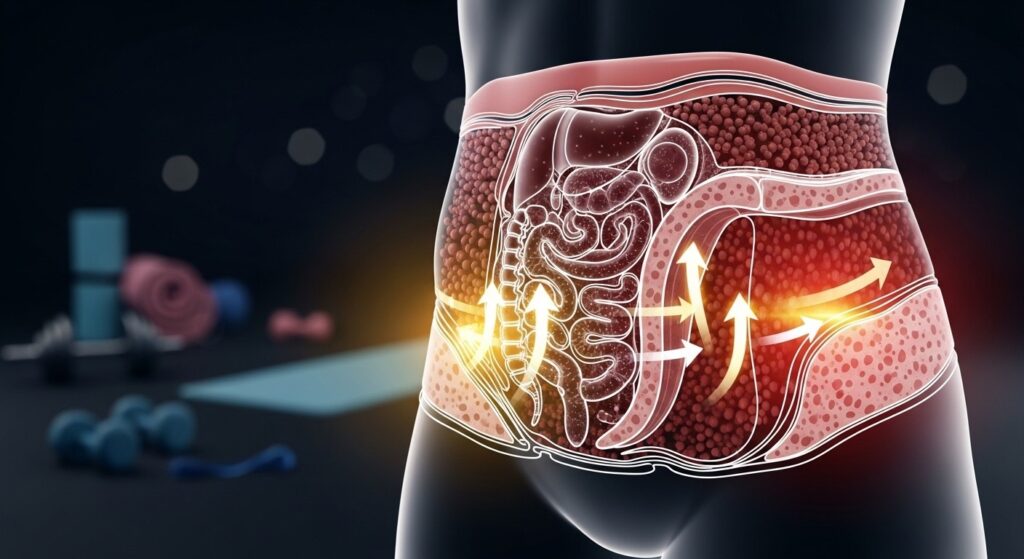
Training the deep core gives you better balance and reduces low-back discomfort. Treat core work as performance and injury-prevention, not a magic diet hack.
Planks and side planks for bracing and spinal stability
Planks teach you how to brace the trunk during your workout. Hold a neutral spine, squeeze your glutes, and breathe evenly for 20–60 seconds per set to effectively engage your core and help lose belly fat.
Side planks target lateral control and protect the spine when you twist or carry loads, making them essential exercises to include in your routine to burn belly fat.
Flutter kicks, heel touches, and controlled leg work for deep control
Use flutter kicks and heel touches for low-load core engagement. Keep the lower back pressed to the floor and move with slow, controlled reps.
Controlled leg lifts train the lower abdominal pathway without repeated spine flexion.
How stronger core muscles improve balance, performance, and low-back resilience
Why it matters: a stronger midsection makes burpees, lunges, and heavy movements more efficient and safer.
“Functional core strength improves posture and reduces the risk of low-back flare-ups.”
- Reframe core work as performance training rather than a direct calorie tool.
- Use short finishers (5–8 minutes) after sessions for consistency and recovery.
- Focus on control and breathing over high rep counts.
| Move | Main benefit | Suggested sets/reps |
|---|---|---|
| Front plank | Bracing & overall stability | 3 x 20–60 sec |
| Side plank | Lateral control & hip stability | 3 x 20–45 sec per side |
| Flutter kicks / Heel touches | Deep core control without flexion | 3 x 30–45 sec or 12–20 reps |
| Controlled leg lifts | Lower abdominal strength | 3 x 8–15 slow reps |
Proven at-home workout formats you can follow this week
Start with plans you can schedule and sustain; short sessions done often add up fast.
Beginner circuit (cardio + strength): perform 3 rounds of the following with 60 seconds rest between rounds.
- Squats — 12 reps
- Push-ups (incline if needed) — 8–12 reps
- Mountain climbers — 30 seconds
- Glute bridges — 12–15 reps
HIIT intervals you can progress
Use simple work-to-rest ratios in your workouts. Start with 20 seconds work / 40 seconds rest for 10–15 minutes to help burn belly fat.
Progress by moving toward 30:30 or 40:20, or increase rounds. Alternate a high-heart-rate move with a strength exercise to protect form and effectively lose belly fat.
Low-impact option when joints need a break
Keep intensity but cut impact. Swap jumping jacks for step jacks, replace burpees with incline burpees or marching burpee variations.
How to gauge effort: use the talk test or rate perceived exertion. If you can speak only short phrases, you’re in the right zone for calorie burn without overdoing it.
| Format | Typical length | Goal | Progression tip |
|---|---|---|---|
| Beginner circuit | 15–25 min | Build strength and steady calorie burn | Add a round or shorten rest |
| HIIT intervals | 10–20 min | Maximize short-term calorie output | Increase work time or reduce rest |
| Low-impact | 15–30 min | Maintain intensity with less joint stress | Use faster step patterns or longer intervals |
Scheduling tip: aim for 3–5 sessions weekly, mixing one or two HIIT days with circuit or low-impact sessions. Consistency drives steady burn belly progress and keeps you injury-free.
How to progress safely so you keep losing fat and avoid injury
A smart plan changes one variable at a time so your body adapts without breaking down. Progress by adjusting work-to-rest, volume, or intensity. Prioritize form so your sessions strengthen rather than strain.
Form cues that protect knees, back, shoulders, and wrists
Keep simple checkpoints for common moves in your workout routine. For squats and lunges, let the knee track over the toes and avoid inward collapse to protect your knees. In hinges and planks, hold a neutral spine and brace the core for effective exercises that strengthen your belly and arms.
Pack your shoulders in push-up positions and keep elbows tucked on pressing work. If wrists feel sore during your workouts, use fists, push-up handles, or elevate hands on a stable surface to ensure a safe exercise experience.
How to scale intensity with tempo, range, and rest control
Change tempo by slowing the lowering phase to increase time under tension without adding load. Increase range of motion gradually—deepen a squat a few inches each week to maximize your workout effectiveness. This approach helps in exercises that target belly fat and improve overall strength.
Reduce rest or add rounds as conditioning improves. You can also add pauses, single-leg variations, or controlled negatives instead of always adding reps to your workouts. These variations can effectively engage your arms and help you find the best way to burn belly fat.
How often to train and when to add recovery days
A repeatable schedule of 3–5 sessions weekly works for most people. Listen to your body: add a recovery day when soreness, poor sleep, or stress builds from your workouts or exercises that burn belly fat. Incorporating exercises that burn belly fat can enhance your routine.
The best way to keep burning and protect gains is steady consistency. Plan rest, sleep well, and adjust progressions so your muscles adapt and your daily life keeps moving forward, including exercises that engage your arms and help manage weight.
Tracking results that matter: waist size, body fat percentage, and performance
Small, consistent wins in measurements and strength tell a clearer story than the number on the scale. Tracking a few reliable metrics helps you judge real progress and keep performing safely.
Why waist circumference can be more useful than scale weight alone
Measure your waist with a soft tape at the same spot each time: just above the hip bones after exhaling. Do this in the morning and wear similar clothes for photos. These measurements can help track your progress with exercises that burn belly fat and overall workouts.
Waist circumference tracks abdominal change and is closely linked to health risk, often more so than weight alone. Incorporating regular exercise can help manage this.
What noticeable results typically look like over four to six weeks
Expect steady, sustainable loss of about 1–2 pounds per week. Visible changes in inches and how clothes fit usually show in 4–6 weeks when you stay consistent.
- Track body fat percentage if you can, plus progress photos and reps or hold times.
- Remember the scale can stall while you gain strength and lose body fat via recomposition.
- Your best dashboard mixes waist, performance (more reps, longer planks), and how you feel.
Nutrition and lifestyle habits that support belly fat loss
Small, steady changes in what you eat and how you move make the biggest difference for long-term waist reduction. Aim for consistency rather than extreme restriction. A steady, modest calorie deficit that you can follow often produces the best weight loss results.
How to set a realistic calorie deficit without extreme restriction
Start by reducing daily intake by 250–500 calories. That supports a safe loss of about 1–2 pounds per week, per CDC guidance. Incorporating exercises that burn belly fat can also help in managing your weight effectively.
Keep it manageable: cut high-calorie drinks, trim portions, and track for a week to see where you can change without feeling deprived. Consider using a hand portion guide to help with portion control.
Protein, fiber, and simple meal structure for appetite control
Build each plate around a lean protein, a high-fiber carb, colorful produce, and a small healthy fat. This combo keeps hunger low and helps preserve muscle while you lose fat.
Sleep, stress management, and daily movement
Poor sleep and chronic stress raise cortisol and make appetite control harder, which can impact your weight management. Prioritize 7–9 hours and use short stress breaks—deep breathing or a 10-minute walk—to steady cravings. Incorporating exercises that burn belly fat can also help during these breaks, and using a hand portion guide can assist in maintaining control over your appetite.
- Take short walks, stair breaks, or extra steps daily to raise total calories burned.
- Plan meals and snacks so impulse eating is less likely.
“Sustainable change beats quick fixes—small habits that fit your life create lasting loss.”
| Habit | Why it helps | Quick tip |
|---|---|---|
| Protein + fiber | Reduces hunger | Add eggs, beans, or yogurt |
| Sleep | Improves decision-making | Wind down 30 min before bed |
| Daily movement | Increases daily calories | Schedule 2 five-minute walks |
Conclusion
Your best path is steady habits that cut overall body fat while building strength and control, and that truth shapes every plan here.
Spot reduction is a myth. A consistent energy deficit plus mixed cardio and resistance work reduces waist size over weeks. Incorporating exercises that burn belly fat can enhance this process, and adding short core sessions for posture and back-friendly control is beneficial.
Remember visceral and subcutaneous stores differ in risk, but the solution remains whole-body fat loss and repeatable habits. Use HIIT sparingly for time-efficient calorie burn and pair it with strength that preserves muscle while managing your weight.
Pick a simple weekly plan from the templates, track waist measures and performance, and expect meaningful change in about four to six weeks with steady effort and realistic pacing.
FAQ